Nobody in this group fixed it by chasing harder
A clinic founder who cut seventeen days by changing what her own office does on a Monday, a publisher who refuses to quote an average, a founder whose deposits did what late fees never did, a development shop that stops work at day fifteen, and a retailer with no receivable at all.
 Stock photo
Every remedy described below happened before the invoice went late. Not one of the five people here fixed the problem by pursuing a late payer harder, and two of them found that a large part of the wait had been sitting on their own side of it the whole time.
Money & World asked people who send invoices two questions. Whether the gap between invoicing and being paid had moved over two years, and what they actually did about it. Twenty-four people answered. Five answered from their own books rather than in general terms, and they sell completely different things: clinical care, software development, an information business, financial tools and clothing.
The five do not agree about the size of the problem. One of them says it does not reach him at all. What they agree about, without having met, is where the lever is.
The delay she could change was in her own building
Answer: Anna Evans found the largest single improvement in her own office rather than at the insurer. Moving claim submission from a weekly Friday batch to the day a visit closes, and pre-checking the fields that caused most rejections, took seventeen days off the wait from visit to money in the account.
Anna Evans founded Interlinked Wellness, a functional medicine practice that runs a membership alongside insured care.
"Our membership side never opens a receivable, so the honest answer for us sits with the health plans, and that wait has stretched."
That is the ordinary version of the story, and she then takes it apart.
"Two years ago we filed claims in a batch on Fridays. A Monday visit sat in a work queue for most of the week, and anything missing from it came back long after the person who saw the patient had stopped thinking about them."
Two separate costs are hiding in that sentence. The first is the queue itself, up to four days of delay that no payer caused. The second is the feedback loop. A rejection that arrives after the clinician has forgotten the visit is expensive to fix, because the information needed to fix it has to be reconstructed rather than remembered.
"The fix was unglamorous and structural. Claims now go out the day the visit closes, and one person runs a short list of the fields that had caused most of our rejections before anything is submitted."
She puts the result at seventeen days off the average, measured from the day of the visit to money in the account. That figure is hers and no public series holds it.
She is careful not to claim the problem was only hers.
"The worst account is a commercial plan that still runs at roughly double the others and has never given me a straight explanation of why. We hold it because the patients on it are ours, and we size our cash reserve against it."
Then the line that reframes the whole question.
"What I underestimated was how much of the delay lived in my own building. I spent a long time describing this as a payer problem, and the biggest single improvement came from a change to what we do on a Monday morning. The plans are slow. We were slower, and ours was the part I could change this quarter."
He will not give you an average, and the reason is the story
Answer: Cem Oner declined to give a two year before and after figure for days sales outstanding, on the grounds that an average can hide a large change in the aging mix. His remedy is to confirm an invoice has been received shortly after sending it, rather than discovering at day sixty that it never properly arrived.
Cem Oner runs Hesap Cebimde, a Turkish publisher of financial and tax calculation tools.
He was asked for a number and refused to give one.
"I would not quote a two-year before-and-after DSO figure without pulling the underlying ledger first, because averages can hide a large change in the aging mix."
This is worth sitting with, because it is the most methodologically careful thing anyone in the pool said. Days sales outstanding is a mean. A business whose average moved from thirty five days to forty may have had every customer slip five days, or it may have had nine customers stay exactly where they were and one large account go to ninety. Those are different businesses with different risks and the same headline number.
His practical remedy follows from the same instinct, which is to find out early what you would otherwise learn late.
"The most effective intervention in my finance work has been moving collections earlier in the process. Do not wait until an invoice is already badly overdue to discover that the customer's contact changed, the invoice is missing a purchase order or the approver never received it."
Read the three failure modes he lists. None of them is a decision to pay late. Each is an invoice that never entered the buyer's payment process at all, and in each case the seller finds out weeks after the clock was supposed to have started.
"I prefer confirming receipt shortly after invoicing, reviewing the aging schedule routinely and escalating according to the actual promise date rather than sending the same generic reminder to everyone."
He also puts the cost in the right place.
"The consequence of slow payment is larger than the receivable itself. A profitable business can still lose operating flexibility if payroll, tax and supplier obligations mature faster than its customers pay."
"The lesson is to manage collection as part of the sale, not as an administrative task that begins after the sale is finished."
The deposit did what the late fee never did
Answer: Will Mitchell moved payment terms to before the work starts, requiring deposits on new projects and pausing the next milestone on any overdue invoice. He reports that deposits closed most of his cash flow gap within a quarter, and that every client who objected to a pause paid within a week of it.
Will Mitchell founded StartupBros.
"Two years ago my average time to collect on a B2B invoice was around 30 days. That gap between sending work and seeing the money strained my cash position during a period when I was reinvesting heavily into operations."
His answer to it was to stop negotiating payment after the work existed.
"I restructured my payment terms so they are set before any work begins. I started requiring deposits on all new projects and moved existing accounts to shorter payment windows. For any invoice unpaid past the due date, my team sends a direct follow-up with a clear note that the next project milestone pauses until the balance clears. I also built a simple internal tracker that flags accounts running late across consecutive invoices, so I can have the conversation with that client before it becomes a collections problem."
The tracker is the same instinct as Oner's aging schedule. It is built to surface a pattern across invoices rather than a single late one, which is the difference between noticing a customer in trouble and noticing a payment in trouble.
"The deposits closed most of my cash flow gap within the first quarter. Pausing work got pushback from a handful of clients, and every one of them paid within a week of the pause. The few who would not accept the new terms left, and my remaining client base pays on schedule."
That last sentence carries a cost the first three hide. His remaining client base pays on schedule partly because some of it is gone.
Net 90 makes the supplier the lender
Answer: Abhishek Pareek describes technology services moving from a thirty day norm to a forty five to sixty day span, with days sales outstanding up around fifteen percent. His firm now stops development work at fifteen days past due, and checks a client's procurement process at contract signature rather than after the first invoice.
Abhishek Pareek is founder and director of Coders.dev, which supplies development work to companies of very different sizes.
"The technological services industry witnessed the shift from the traditional 30-day payment period to the unstable 45-60 day span in the last two years. The financial operations have seen the Days Sales Outstanding increase by about 15% due to the priority of the enterprises in liquidity."
He then names the split that matters more than the average, which is exactly the aging mix Oner refused to average over.
"The newer companies usually make payments within 15-30 days but larger companies prefer to delay payment. The hardest case occurred when companies required Net 90 terms which means the provider acts as a no-interest lender."
That description is accurate and it is not rhetorical. A supplier delivering on ninety day terms has extended unsecured credit at zero percent, for ninety days, to a counterparty it did not credit check and cannot price.
His enforcement is deliberately not an accounting function.
"If the invoice goes over the established aging limit, for example, 15 days past the due date, the production and development departments are informed in order to stop work on the project. This moves the payment discussion to the front lines of the operation which usually helps to untangle the situation faster than taking any measures from the accounting department."
And on late fees he is blunt that they did not work, which points him back upstream again.
"The solution we found is to check the client's procurement processes while signing contracts to make sure that its payment system is set up in advance and manual follow-ups are no longer needed."
Checking how a customer pays before agreeing to sell to them is the earliest position any of the five takes.
The business with no receivable at all
Answer: Nicolas Falourd sells direct to consumers, who pay at checkout, so the interval between invoice and payment is effectively zero and he reports no change over two years. He is included because his answer marks the boundary of the problem rather than describing it.
Nicolas Falourd runs Cyber Techwear, an online clothing retailer.
"As an online direct-to-consumer retailer, customer payments are collected at checkout so the invoice-to-pay interval for sales is effectively zero; we don't see the delays journalists typically report for B2B invoicing. For the occasional B2B/supplier invoices we do issue or receive, payment timing has not materially changed recently, because we avoid carrying lengthy payable terms and plan inventory to match cash flow."
This is the most useful thing a negative case can do. Payment delay is not a general condition of business. It is a feature of selling to another business on terms, and a firm that never opens a receivable never acquires the exposure.
"To protect working capital we rely on prepaid customer payments, strict reconciliation of gateway receipts, and negotiating supplier terms when needed. Those operational controls -- not late fees or factoring -- are what has kept cashflow stable for Cyber Techwear."
Even here the pattern holds. He names prepayment and supplier terms, both of which are set before anything is owed, and explicitly rejects the two remedies that operate after the fact.
The one buyer that has to tell you within a week
Answer: Under the federal Prompt Payment rule the payment period begins on receipt of a proper invoice, not on receipt of any invoice. The regulation lists ten items that make an invoice proper, requires an agency to return an improper one within seven days identifying every defect, and pays interest automatically when payment is late.
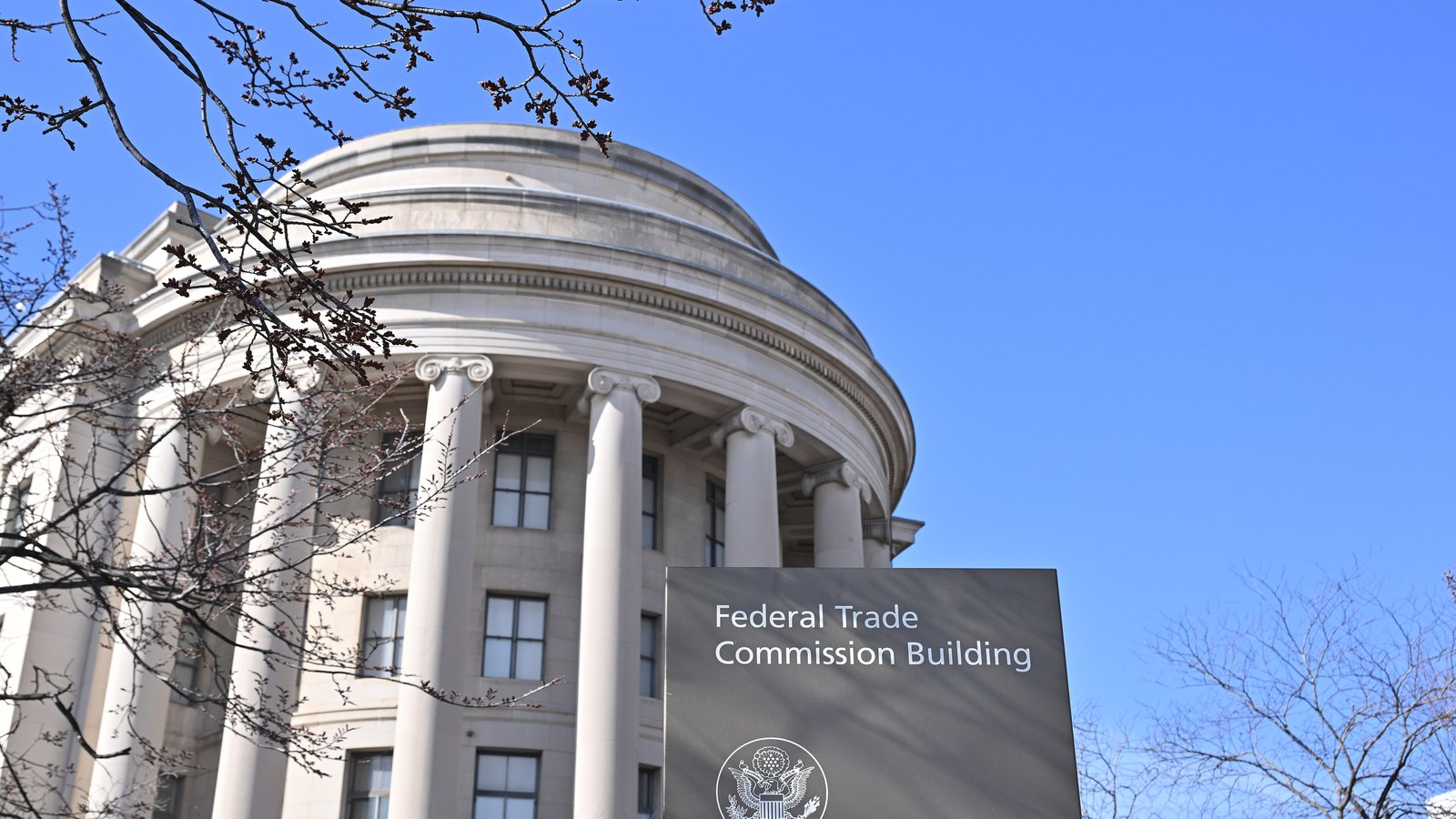
There is a document underneath the thing Oner and Evans both discovered, and it belongs to the one buyer in the American economy that is required to behave this way.
Under 5 CFR 1315.4(f), the period available to a federal agency to pay without incurring an interest penalty begins on the date of receipt of a proper invoice. Where a contract says nothing else, 1315.4(g)(1)(iv) sets the due date at thirty days after that period starts.
The load is carried by the word proper. Section 1315.9(b)(1) lists what the term means, and it is a checklist of ten items: name of vendor, invoice date, contract or other authorisation number, the vendor's own invoice or account number, a description with price and quantity, shipping and payment terms, taxpayer identifying number, banking information, a contact name with title and telephone number where practicable, and any other substantiating documentation the contract requires.
Miss one and the clock has not started.
What the government then owes the vendor is the part almost no private buyer offers. Section 1315.4(c)(2) requires the agency to review each invoice as soon as practicable and, when it is improper, to return it "as soon as practicable after receipt, but no later than 7 days after receipt". The same paragraph requires the agency to "identify all defects that prevent payment and specify all reasons why the invoice is not proper".
The seven day notice has teeth. Under 1315.4(g)(5), when an agency misses it, the days allowed for paying the corrected invoice are reduced by the number of days the notice was late, and interest is then calculated against that shortened deadline. Being slow to reject costs the buyer the time it took.
Interest itself is not something the vendor has to ask for. Section 1315.4(i) states that when payments are made after the due date, interest will be paid automatically. Section 1315.10(b)(2) puts it beyond doubt: late payment interest penalties "shall be paid without regard to whether the vendor has requested payment of such penalty", and must arrive with a notice stating the amount, the number of days late and the rate used.
So the federal rulebook already encodes what these five learned by losing money. The clock is defined by a complete invoice reaching the right place. A buyer who will not pay owes you that news within a week. And a late payer owes interest whether or not you were brave enough to invoice for it.
None of which reaches a single contributor above, because all of them are selling to private buyers. What the rule demonstrates is that the seven day answer is administratively possible, since the largest buyer in the country is obliged to manage it across every agency.
Britain makes large buyers publish the mix, not just the average
Answer: The Reporting on Payment Practices and Performance Regulations 2017 require large British companies to publish, twice a year, their average time to pay and the share of payments made within thirty days, between thirty one and sixty, and at sixty one or later. An amendment in force from April 2024 added the value of payments in each band.
Oner's objection to averages has been legislated against in one jurisdiction, and the fix is instructive.
Schedule 1 of SI 2017/395 requires a qualifying company to state, for payments made in a reporting period, the average number of days taken to make them, counted from the day after the invoice was received. That is paragraph 9(a) and on its own it is exactly the number Oner distrusts.
Paragraph 9(b) is the correction. The company must also give the percentage of payments made within thirty days, between thirty one and sixty days, and on or after day sixty one. A firm cannot report a respectable mean while a quarter of its suppliers sit past sixty days, because both numbers appear side by side.
Paragraph 9(c), inserted by SI 2024/444 with effect from 5 April 2024, closes the remaining gap. Companies must now give the sum total of payments in each band and not merely the count. Percentages by number of invoices can flatter a buyer that pays a thousand small suppliers quickly and its largest three very slowly. Reporting the money in each band makes that visible.
Two further items were added at the same time. Paragraph 10A requires the total value of payments that were not made within the payment period, and paragraph 10B requires the percentage of late payments attributable to a dispute. That second one matters because dispute is the standard explanation for a late payment, and until 2024 nothing required a buyer to say how much of its lateness it was actually claiming.
One definition is worth setting against the American rule. Paragraph 13 defines the relevant day, from which the count runs, as "the day on which a company receives an invoice or otherwise has notice of an amount for payment". Notice of the amount is enough. The British clock starts on arrival; the American one starts on arrival of a complete document.
The regulations bind large companies and limited liability partnerships that meet the size thresholds. They do not cover small buyers, they do not cover any of the five contributors above, and they set no deadline for paying anybody. They require publication and nothing else.
What the five have in common
Answer: Every intervention that worked was applied before the due date. Deposits and procurement checks come before the work, same day submission and receipt confirmation at the invoice, a paused milestone during it. Late fees and post-hoc chasing were named by two contributors specifically as things that did not work.
Line up the remedies and the pattern is hard to miss.
- Pareek checks the buyer's procurement process at contract signature, before any work exists.
- Mitchell takes a deposit before the project starts and shortens the terms.
- Evans submits the day the visit closes and pre-checks the fields that cause rejections.
- Oner confirms receipt shortly after invoicing and escalates on the promised date rather than on a schedule.
- Falourd is paid at checkout and negotiates his own payable terms.
Not one of these is a collections technique. Every one of them is an attempt to make the payment start correctly, or to find out sooner that it has not.
The two who mention late fees mention them as failures. Pareek says pursuing a fee for lateness was where the problem occurred and that he replaced it with a procurement check. Falourd names late fees and factoring as specifically not what kept his cash flow stable.
The second shared feature is the detection lag, and it is the same shape as the remedy. Oner lists three ways an invoice can fail to arrive properly, each discovered long after the fact. Evans describes rejections coming back after the clinician had stopped thinking about the visit. Mitchell built a tracker precisely because a pattern across invoices was invisible until it became a collections problem. In each case the money was not lost at the due date. It was lost at the start, and noticed at the end.
What this does not prove
Five accounts are five accounts, drawn from twenty four answers to one question. This is not a measurement of what happened to payment times, and none of the figures above can be checked by a reader.
The seventeen days, the thirty day average, the fifteen percent movement in days sales outstanding and the shift to a forty five to sixty day span are each a person describing their own books. No public series holds any of them, which is why each is attributed rather than asserted. Oner's refusal to give a figure at all should be read as the most rigorous answer in the set rather than the least useful one.
There is also a selection problem that is worth naming rather than hiding. People who answer a question about getting paid late are more likely to be people who did something about it and want to say so. Nothing here samples the businesses that changed nothing, and a remedy that four contributors credit is not thereby a remedy that works.
The documents are evidence about rules and nothing else. The Prompt Payment regulations describe what a federal agency owes a vendor, and they reach no private transaction anywhere in this piece. The British regulations require disclosure by large companies and impose no payment deadline at all. Neither tells you what any private buyer paid anybody, or when.
The gap we could not close is the one that would settle it. There is no American equivalent of the British payment practices register, so there is no public record of which large United States buyers pay their suppliers slowly, by how much, or with how much of the money sitting past sixty days. The businesses that would appear in such a record are the ones who would have to file it.