Dollar Tree booked $383m of refunded tariffs in one quarter, which is $1.31 of its $2.70 of earnings per share, and the spending it promised in exchange lands next quarter
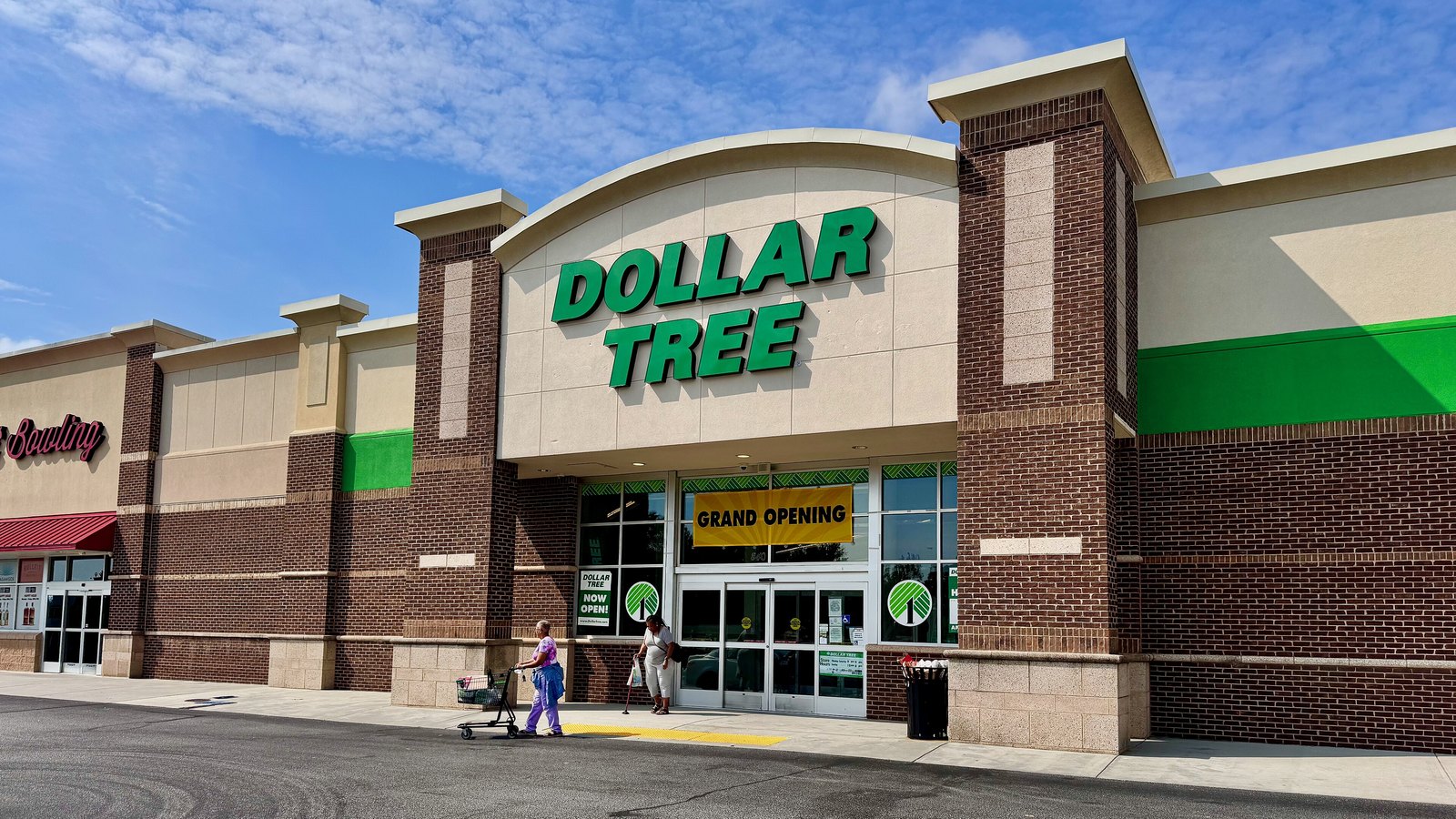
Half of Dollar Tree's earnings this quarter came from money the government sent back.
The company reported diluted earnings of $2.70 a share for the thirteen weeks to 1 August, and its own release says $1.31 of that is the net impact of tariff refunds. That is 49 percent of the total, on this desk's arithmetic. Operating income margin expanded 900 basis points, of which the company attributes 650 to the same thing.
The gross figure is $383m of refunds under the International Emergency Economic Powers Act, $369m of it through cost of sales and $14m arriving as interest. Set against that are $22m of reinvestment expenses in cost of sales, $15m more in selling and administrative costs, and $13m of duties on aluminium pans and paper plates that were charged and not returned.
The bill arrives in the third quarter
The company has told shareholders what the rest of the reinvestment costs.
Third quarter diluted earnings are expected at $0.80 to $0.95 a share, and that range includes an approximate $0.50 impact from tariff refund reinvestments. So a charge worth roughly half the quarter's guided earnings is already in the outlook, three months after the credit that funded it was booked.
For the full year, adjusted diluted earnings are guided to $7.70 to $8.05, of which about $0.60 is the net refund benefit. Net sales are put at $20.5bn to $20.7bn on comparable store growth of 3 to 4 percent, with about 400 openings and 75 closings.
Underneath the refund
Sales rose 7.0 percent to $4.9bn. Comparable store sales rose 3.7 percent, and the split matters: average ticket did 3.3 points of that and traffic did 0.4. For the year to date the traffic line is negative, down 0.3 percent, with ticket up 3.9.
Gross margin was 42.9 percent, up 850 basis points, of which 680 is the refund. The company puts the rest down to lower tariff rates, favourable shrink and occupancy leverage, partly offset by sales mix. Selling and administrative costs fell 40 basis points to 29.2 percent of revenue, and 30 of those basis points went the other way as refund reinvestment.
The company opened 75 stores in the quarter and converted or added about 710 to its multi-price format, which now covers roughly 6,600 of its 9,436 stores across the United States and Canada. It bought back 5.6 million shares for $605m and ended the quarter with $1.1bn of cash, no commercial paper outstanding and nothing drawn on its revolver.
Transition services income from Family Dollar, which the company sold, ran to $18m in the quarter and $39m for the year to date.
The largest figure any retailer has published on this beat
Four American retailers have now put a dollar amount on their IEEPA refunds in results this publication has covered. Dick's Sporting Goods reported $59m on 25 August. Kohl's reported about $150m on 26 August. Ross Stores reported about $253m on 20 August. Dollar Tree's $383m is larger than any of them. Walmart, BJ's Wholesale and Starbucks have all described refunds without sizing them.
What is new here is not the size. It is that Dollar Tree has published, in advance, what the offsetting spend costs in the quarter after.