A $5,210 wind policy that still leaves most perils elsewhere
Citizens' approved county averages put its homeowners wind-only form at $5,210 in Collier and $4,279 in Lee. Those figures cover wind and hail, not a complete homeowners policy, and the form leaves flood, liability and several familiar property losses outside the contract.
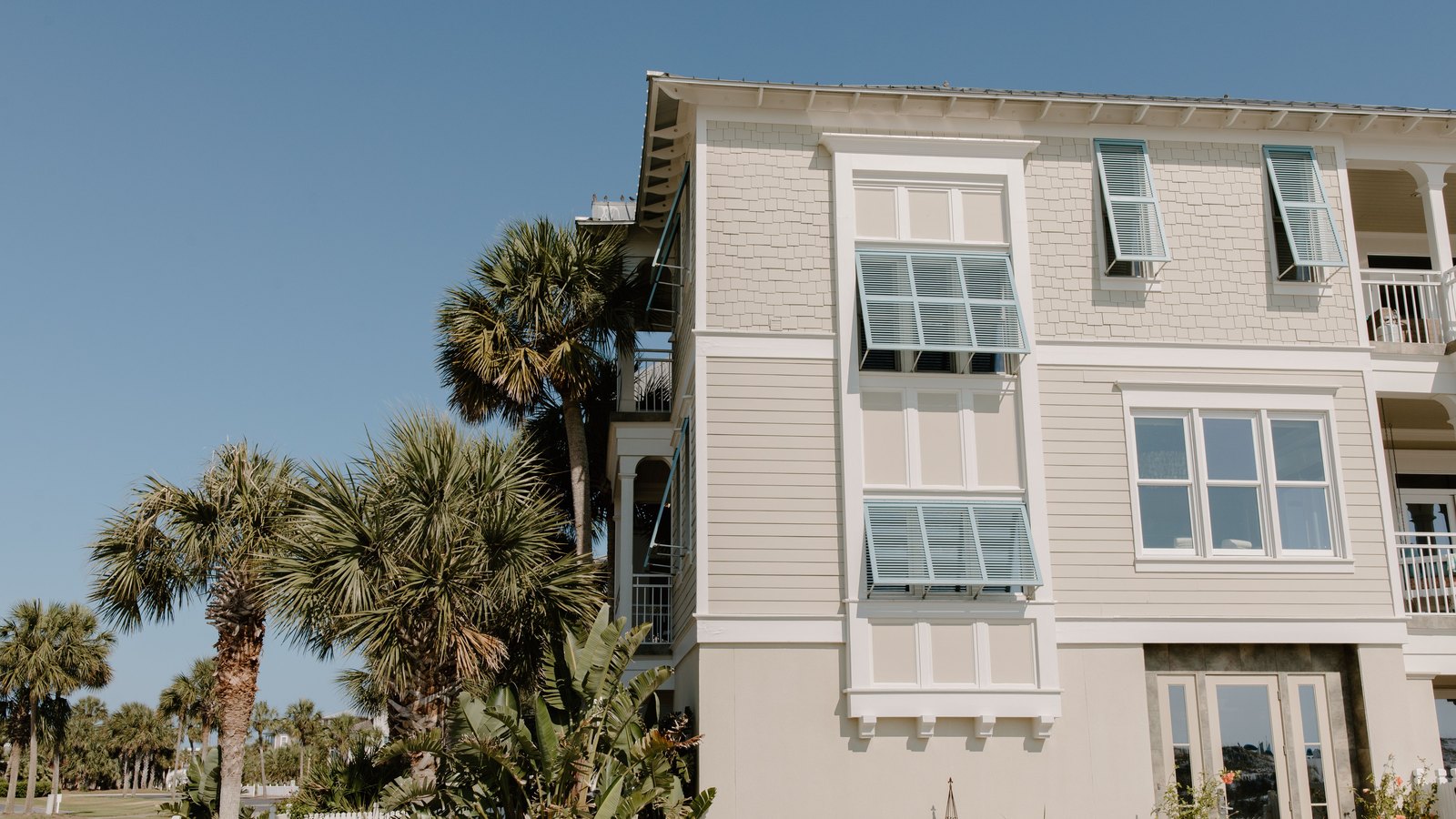 Stock photo
The number that looks like a homeowners premium is not a homeowners policy.
Citizens Property Insurance Corporation's approved 2026 county table puts the average premium for its HW-2 homeowners wind-only form at $5,210 in Collier County and $4,279 in Lee County. The same document puts the dwelling wind-only form higher, at $8,512 in Collier and $7,654 in Lee.
Those figures do not describe interchangeable coverage. HW-2, HW-6 and DW-2 insure different property interests. A wind-only contract also does not pick up every peril that a standard homeowners policy would carry. The premium pays for a narrow piece of the risk, even when that piece is the most expensive one on the coast.
That distinction is the story. A Florida homeowner can hold one policy for wind and hail, another for the risks left after wind is excluded, and a separate flood policy. Reading one premium without reading the form produces a cheap comparison and an expensive misunderstanding.
What is windstorm insurance in Florida?
Windstorm insurance covers property damage caused by wind and hail, including covered damage from hurricanes and tropical storms. In Florida's coastal market, it may appear inside a multiperil homeowners policy or as a separate wind-only policy. A separate policy covers its named slice of risk, not the whole homeowners contract.
Citizens describes its wind-only policies in exactly those terms on its policy-types page: they cover damage from hail and wind storms. The personal residential forms are HW-2 for homeowners, HW-4 for renters' contents, HW-6 for condominium unit owners, DW-2 for dwellings, and two mobile-home forms, MW-2 and MD-1.
The list matters because the phrase “windstorm insurance” is not one product with one price. A condominium unit owner is insuring a different interest from the owner of a detached house. A dwelling form is not the homeowners form. The county table reflects those differences before it reflects the address, construction or mitigation features of any individual property.
A multiperil policy may include wind in the same contract. Citizens' July 2026 product report divides its personal residential multiperil book between policies with wind and policies excluding wind. It separately reports the personal residential wind-only book. That structure is why two people can both say they have Citizens property insurance while carrying very different packages of covered perils.
Flood sits outside the wind-only promise. Storm surge does not become a wind loss merely because a hurricane produced it. A Gulf Coast property can suffer covered wind damage to the roof and separate flood damage below, with different contracts, limits and deductibles answering each part.
How much does Citizens windstorm insurance cost in Collier and Lee counties?
Citizens' approved 2026 averages range from $2,001 for an HW-6 condominium unit-owner wind policy in Collier County to $8,512 for a DW-2 dwelling wind policy there. The comparable Lee County estimates are $2,413 and $7,654. These are county portfolio estimates, not prices available to every property.
| Citizens wind-only form | Collier approved average | Approved change | Lee approved average | Approved change |
|---|---|---|---|---|
| HW-2 homeowners | $5,210 | -5.4% | $4,279 | -5.9% |
| HW-6 condo unit owner | $2,001 | -7.5% | $2,413 | -7.8% |
| DW-2 dwelling | $8,512 | +8.7% | $7,654 | +3.9% |
| MW-2 and MD-1 mobile home | $4,257 | +7.3% | $3,858 | +0.6% |
The figures come from Citizens' revised 2026 rate kit. The rates took effect on 1 July 2026 for new policyholders and apply to existing policies at renewal. The table applies the approved changes to the book used for the filing. It is not a quote engine, and the average is not a median.
The county split also shows why a statewide percentage is a poor answer. The HW-2 average falls in both counties, yet the approved Collier figure remains $931 above Lee. DW-2 moves the other way: rates rise in both counties, with the Collier average $858 higher. Form and county interact before the insurer considers the particular building.
The renter wind-only rows are too small to carry a local conclusion. The filing shows two HW-4 policies in Collier and two in Lee, with approved average premiums of $941 and $2,238. A four-policy comparison is a description of those policies, not evidence of a stable county price.
The same caution applies to every row. Coverage limit, location inside a rating territory, roof and opening protection, construction type, occupancy, primary-residence status and deductible can move a particular premium away from the county average. The table shows what Citizens' insured portfolio looked like under approved rates. It does not show what one house ought to cost.
What do current Citizens policy totals reveal about the Southwest Florida market?
At 31 July 2026, Citizens carried 976 personal residential wind-only policies in Collier County with $3.775m of annual premium, and 2,006 in Lee County with $7.675m. Dividing premium by policies produces blended averages of $3,867 and $3,826. Those ratios mix forms and coverage amounts, so they are descriptive only.
The figures sit in Citizens' Detail by County report. The same report lists $446.6m of personal wind-only exposure in Collier and $837.7m in Lee. Its product-level footnote says personal exposure includes Coverages A through D, except for specified dwelling and mobile forms.
That definition blocks a tempting shortcut. Premium divided by total exposure does not yield a clean price for dwelling coverage because the denominator can include other structures, personal property and loss of use. Nor can the $3,867 and $3,826 ratios be compared directly with the HW-2 filing averages. The current ratios blend all personal wind-only forms, while the rate filing separates them.
Wind-only policies make up a substantial part of Citizens' personal residential book in both counties. Citizens reported 1,892 personal multiperil policies and 976 wind-only policies in Collier, putting wind-only at 34.0 percent of the combined count. Lee had 6,151 multiperil and 2,006 wind-only policies, putting the wind-only share at 24.6 percent. These are Money & World calculations from Citizens' counts, not market shares for all insurers.
The statewide market data explains why Citizens deserves separate treatment. In its July 2025 Property Insurance Stability Report, the Florida Office of Insurance Regulation counted 53,487 Citizens homeowners wind-only policies and 18,252 in the admitted voluntary market in the first quarter of 2025. Citizens held 74.56 percent of that reported segment.
The condominium unit-owner split was more concentrated. OIR counted 17,428 Citizens wind-only policies and 4,734 voluntary-market policies, giving Citizens 78.64 percent. The regulator states that both comparisons exclude surplus-lines policies. They are statewide and dated, but they establish that Citizens was the main admitted-market carrier in these narrow forms.
What does the Citizens HW-2 wind-only policy actually cover?
The HW-2 worksheet covers wind and hail damage to the dwelling and other structures, personal property on an actual-cash-value basis unless replacement cost is selected, and loss of use equal to 10 percent of the dwelling limit. It provides no personal liability or medical-payments coverage and excludes several exposed structures.
The operative details appear in Citizens' October 2025 HW-2 Coverage Worksheet. Coverage A insures the primary dwelling for wind and hail on a replacement-cost basis. The standard minimum is $25,000. The maximum is less than $700,000, except in Miami-Dade and Monroe counties, where it is less than $1m.
Coverage B starts at 2 percent of Coverage A for other structures. Options run from 5 to 60 percent in five-point increments, and the coverage can be excluded. Settlement is replacement cost for buildings and actual cash value for structures that are not buildings.
The form then removes some structures that often matter on the coast. Carports, porches, aluminum-framed screened enclosures and screen pool cages are not covered when their roofs or coverings use the listed light materials and they are constructed open to the weather. Structures roofed with thatch, grass, palm, lattice, slats or similar material are also outside the coverage described by the worksheet.
Personal property begins at 25 percent of Coverage A and may be increased to 50 percent or excluded. The default loss settlement is actual cash value, with replacement-cost coverage available. Special limits remain. Money has a $200 limit, securities and watercraft each have $1,500, jewelry and furs have $1,000, and business property is limited to $2,500 on the premises and $500 away from it.
Loss of use is 10 percent of Coverage A. That is the part that can answer temporary living costs after a covered wind loss, subject to the policy. The form also includes $1,000 of loss-assessment coverage and debris removal for wind-damaged trees up to $1,500 in total, with no more than $1,000 for one tree.
Ordinance or law coverage is 25 percent of Coverage A, with a 50 percent option. Limited fungi, wet or dry rot, or bacteria property coverage is capped at $10,000. The worksheet lists wind-mitigation credits as available when qualifying wind-resistive features are installed.
What is missing from a wind-only policy?
A wind-only policy is not a substitute for a complete homeowners contract. Citizens' HW-2 worksheet lists no Coverage E personal liability and no Coverage F medical payments. It does not cover earthquake, sinkhole, sewer or drain backup, scheduled personal property, identity-fraud expense, or several other familiar extensions. Flood requires separate coverage.
The absence of liability is easy to overlook because the contract still uses homeowners-style coverage letters. Coverage A through D are property and loss-of-use categories. Coverage E and F are the liability categories, and the HW-2 worksheet marks both “not covered.” A premium comparison against a multiperil policy therefore needs to account for what another contract must supply.
The same is true of water. The worksheet labels its water-loss limitation questions as not applicable because the covered causes of loss are wind and hail. Citizens' public description does not promise flood, plumbing leaks or sewer backup. The question after a hurricane is what peril caused each part of the damage, not whether the storm had a name.
Our earlier analysis of how much flood insurance costs in Florida covers the separate federal and private flood market. Citizens also requires flood coverage for many personal residential policies that include wind, on a statutory phase-in schedule, although wind-only condominium unit-owner forms are among the exclusions identified by Citizens. That requirement does not turn the wind contract into a flood contract.
Deductibles need separate attention as well. The HW-2 worksheet lists hurricane options of $500 and 2, 3, 4, 5 or 10 percent of Coverage A. Other wind deductible choices are $500 and 2, 3, 4 or 5 percent. Our Florida hurricane deductible guide explains the calendar-year rule and the dollar base. A lower premium attached to a higher percentage can move cost from the annual bill to a covered claim.
Even the replacement-cost label has a boundary. The dwelling is settled at replacement cost, but the worksheet warns that a coinsurance penalty may apply when it is insured below 80 percent of replacement cost. Extended or increased replacement cost is not available. A policy can therefore promise replacement-cost settlement without promising an unlimited rebuild.
Who can buy Citizens wind-only coverage?
Citizens wind-only coverage is not available throughout Florida merely because a property faces hurricane risk. Section 627.351 limits the forms to residential and commercial properties inside areas eligible for the former Florida Windstorm Underwriting Association on 1 January 2002. The property must also satisfy Citizens' underwriting and private-offer rules.
The boundary is historical. Florida Statute 627.351 directs Citizens to offer personal and commercial forms covering the peril of wind only in those legacy eligible areas. It does not define eligibility as every address in a coastal county, and Citizens maintains an address-level wind-only eligibility tool for agents and consumers.
Private-market availability creates another gate. For a primary residence applying for Citizens, an offer from an authorized insurer for a standard or qualifying basic policy including wind generally makes the risk ineligible unless that premium is more than 20 percent above Citizens' comparable premium. The current statute applies a similar 20-percent test at renewal.
“Comparable” is doing real work. Citizens' own eligibility guidance tells agents to compare the amount of coverage, policy forms, exclusions and mitigation credits, not the premium alone. A private multiperil offer and a Citizens wind-only form are not comparable merely because both protect the same address from wind.
Florida law also preserves the split-policy structure. An eligible policyholder may retain Citizens wind-only coverage and buy coverage excluding wind from an authorized insurer without losing future eligibility for a Citizens multiperil policy. That permission confirms what the form already shows: wind-only coverage is designed to coexist with another contract carrying the remaining property risks.
Why can rates fall for one wind form and rise for another?
Citizens' 2026 county tables show falling HW-2 and HW-6 averages but rising DW-2 averages in both Collier and Lee. The forms cover different properties, limits and occupancy patterns, and each filing row applies approved rating changes to its own insured book. One headline percentage cannot describe every coastal policy.
The contrast is sharpest in Collier. The homeowners wind-only average falls 5.4 percent to $5,210, while the dwelling wind-only average rises 8.7 percent to $8,512. In Lee, the corresponding moves are a 5.9 percent reduction to $4,279 and a 3.9 percent increase to $7,654.
Those are average changes across policies, not a promise that every renewal follows the same path. Citizens says the change varies by line, product type and territory. Coverage changes, mitigation adjustments, deductibles and property characteristics can move the individual result. A homeowner adding limits while the filed rate falls can still receive a larger bill.
The form distinction also warns against treating “dwelling” as another word for “homeowners.” DW-2 often serves a different occupancy or underwriting need from HW-2. Its higher approved average can reflect a different mix of insured values and risks. The public table does not decompose the county result far enough to assign one cause, so the data supports the difference without proving why it exists.
The clean comparison is narrower: same form, same county, old approved average against new approved average, with limits and other policy inputs held within the filing method. Anything broader needs the declarations pages and quotes that the public dataset does not contain.
How should a Florida windstorm quote be read?
Read a windstorm quote as one component of the property's insurance package. Match the policy form, covered causes of loss, dwelling and contents limits, settlement basis, excluded structures, hurricane and other-wind deductibles, mitigation credits, and companion coverage. The annual premium alone cannot show whether two offers insure the same risk.
Start with the form name. HW-2, HW-6 and DW-2 are not cosmetic codes. They identify whose property is insured and which coverage structure applies. Then compare the declared limits, especially Coverage A, because limits drive both the amount available after a loss and percentage deductibles before payment.
Next, separate replacement cost from actual cash value. The HW-2 dwelling uses replacement cost, while personal property starts on actual cash value unless replacement-cost coverage is selected. A quote that looks lower can place depreciation on a large contents loss. The policy's settlement language answers that question, not the marketing label.
Look at the structures outside the main walls. A Gulf Coast home can carry a screen enclosure, carport or porch with a large replacement cost and no protection under the standard HW-2 language described above. A coverage percentage is less important than whether the structure enters the contract at all.
Then reconstruct the rest of the package. If wind is separate, identify which policy carries fire, theft, water losses and liability, and which contract carries flood. Add the premiums and compare the combined limits and exclusions. A wind-only premium beside a full homeowners premium is not a price comparison until those missing pieces are restored.
Finally, read the deductible in dollars. A 2 percent hurricane deductible on $500,000 of Coverage A is $10,000. A 5 percent deductible is $25,000. Citizens' county average does not reveal which deductible a particular policy carries, so it cannot measure the policyholder's full storm exposure.
What else should Florida homeowners ask about wind-only coverage?
The useful questions are mechanical: which peril damaged the property, which form covers it, what dollar limit applies, what settlement basis values the loss, and which deductible attaches. Wind-only coverage becomes easier to understand once it is treated as a defined contract rather than a cheaper version of homeowners insurance.
Does Citizens wind-only insurance cover flood or storm surge?
No. Citizens describes the forms as covering wind and hail storms. Flood and storm surge require separate coverage. A single hurricane can produce claims under both policies when wind damages one part of a property and rising water damages another.
Is the Citizens county average the premium I should expect?
No. The approved averages describe insured portfolios by form and county. A particular premium depends on territory, limits, building characteristics, mitigation, occupancy, deductible and other rating inputs. The July in-force averages also mix several forms and should not be treated as quotes.
Does wind-only insurance include liability if someone is hurt at the property?
The Citizens HW-2 worksheet provides no personal liability coverage and no medical-payments coverage. Those risks would need to be addressed elsewhere in the insurance package. Other forms should be read on their own terms.
Can every home in Collier or Lee County buy Citizens wind-only coverage?
No. The property must be inside the legacy wind-eligible area defined by the former Florida Windstorm Underwriting Association boundary, satisfy Citizens' underwriting rules, and pass the applicable private-market offer test. County location alone does not settle eligibility.
Why is the DW-2 average higher than the HW-2 average?
The public filing shows that the forms insure different books of business, but it does not publish enough county-level detail to isolate one cause. Coverage amount, occupancy, construction, location and the mix of risks can all differ. The defensible conclusion is that the averages are not interchangeable.