Seoul closed down 10.84 percent, the fourth worst day in the index's history, and three hours later Europe opened higher
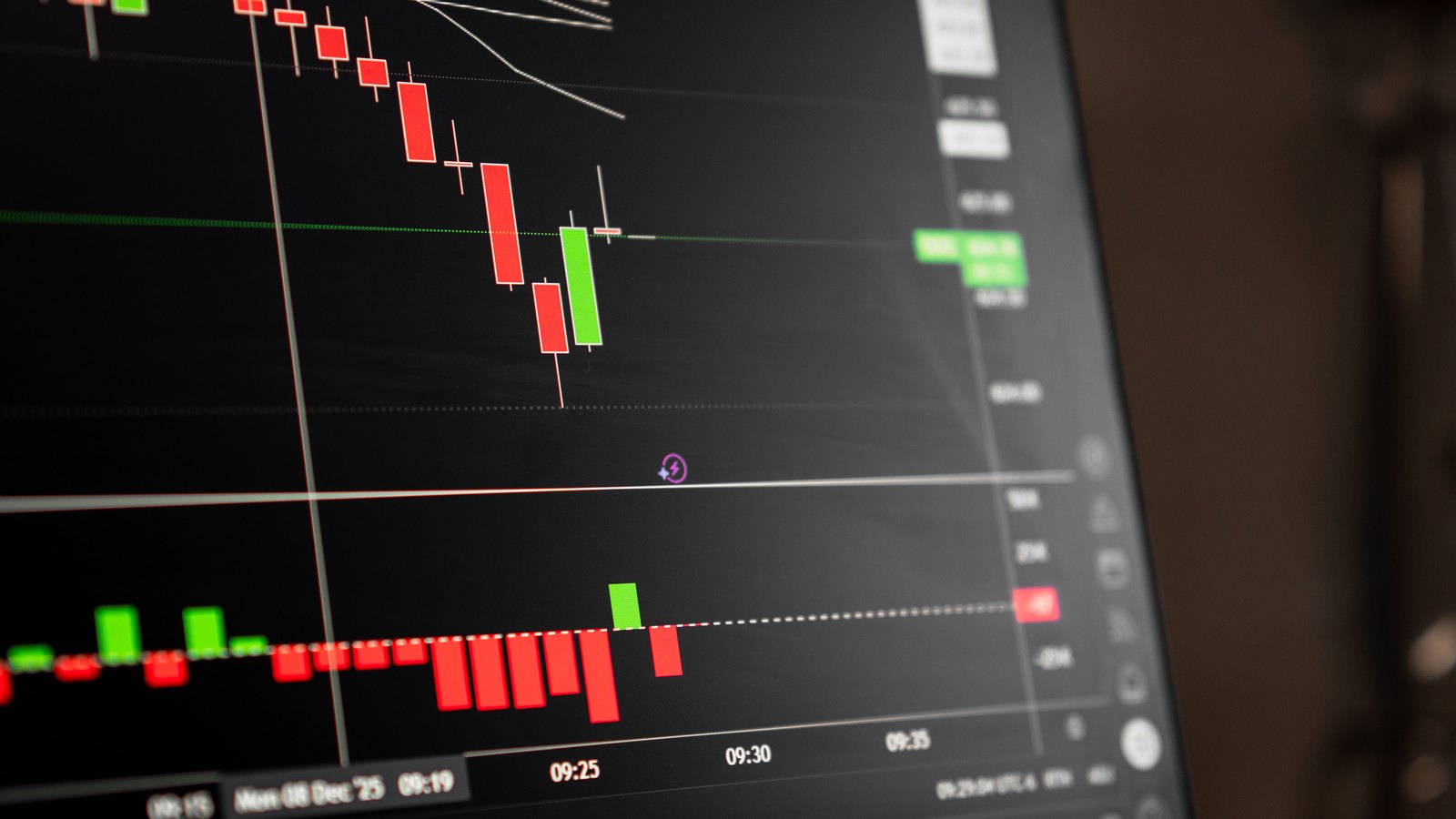 Stock photo
732.09 points.
That is what the KOSPI lost on Tuesday, the second largest fall in points the index has recorded and the fourth largest in percentage terms. It closed at 6,023.66, down 10.84 percent, after touching 5,992.91 in the minutes before the bell, as Lim Chunhan reported at The Asia Business Daily.
The day needed two kinds of brake and used both. A program sell sidecar fired at about 9:06 a.m. in Seoul, suspending the effect of sell orders routed through program trading, and a circuit breaker halted the whole KOSPI market for 20 minutes after 10 a.m. This site covered that halt as it happened, when the index was down 8.02 percent. It lost a further 2.82 points of percentage between the halt and the close.
The smaller Korean market did the same thing about two hours later. The KOSDAQ triggered its own sidecar at about 9:14 a.m. and its own circuit breaker at 12:01 p.m., at which point it was down 61.95 points, or 8.09 percent, at 702.91. It closed at 705.85, a fall of 7.72 percent, and during the session it traded as low as 697.45, its first move below 700 in a year and three months.
Somebody was buying all of this. Foreign investors sold a net 4.9914 trillion won of KOSPI shares on the day, and Korean individuals bought a net 4.3275 trillion won of it, with domestic institutions taking a further 636.3 billion won. That is a very large transfer of a falling asset from foreign hands to Korean retail hands in a single session, and it is the figure in Tuesday's tape most likely to matter in a month.
The damage sat where it has sat all week. Electrical and electronics fell 13.60 percent as a sector, manufacturing 11.81 percent, medical and precision instruments 10.95 percent, entertainment and culture 10.71 percent and construction 9.38 percent. Among the large caps, Samsung Electronics fell 13.39 percent, SK hynix 14.65 percent, SK Square 15.60 percent and Samsung Electro-Mechanics 15.92 percent.
Japan closed lower and nothing like as low. The Nikkei 225 finished at 62,364.92, down 2,566.27 points or 3.95 percent, having opened at 64,539.92, reached 64,573.18 three minutes into the session and bottomed at 61,923.60 at 12:31 in the afternoon.
Then Europe opened, and went up.
The STOXX Europe 600 was quoted at 645.53 and the Euro Stoxx 50 at 6,293.14 shortly after nine in London, both marginally firmer. Germany's DAX was the strongest of them at 25,490.23, up 129.20 points or 0.51 percent on the day, having opened at 25,496.13. The FTSE 100 was up 0.21 percent at 10,804.06 and the CAC 40 up 0.19 percent at 8,422.08. American futures were mixed and small: S&P 500 futures at 7,434.25, down 0.19 percent, and Nasdaq 100 futures at 27,927.00, down 0.93 percent.
A note on sourcing and on what is verified. The Korean closing levels, the sidecar and circuit breaker times, the investor flow figures, the sector moves and the four large cap declines come from The Asia Business Daily's report, credited above, and the KOSPI close and percentage were checked independently against market data before publication. The Nikkei 225 close, open, high and low were read from the official Nikkei Stock Average index page published by Nikkei Inc. The DAX level, change and opening price were read from Deutsche Boerse's own Frankfurt exchange feed and matched a second independent quote to the cent. The European and American figures are intraday and will move, because those markets were open as this was written. The Korea Exchange publishes its circuit breaker record through a session based portal rather than a fixed public address, so there is no primary document linked here.
Where we read it: Lim Chunhan at The Asia Business Daily. Read their story.
The document: No public filing has been released.