The Bank of Korea raised its base rate to 3 percent for a second meeting running, and the forecast it moved by 0.7 points was growth, not inflation
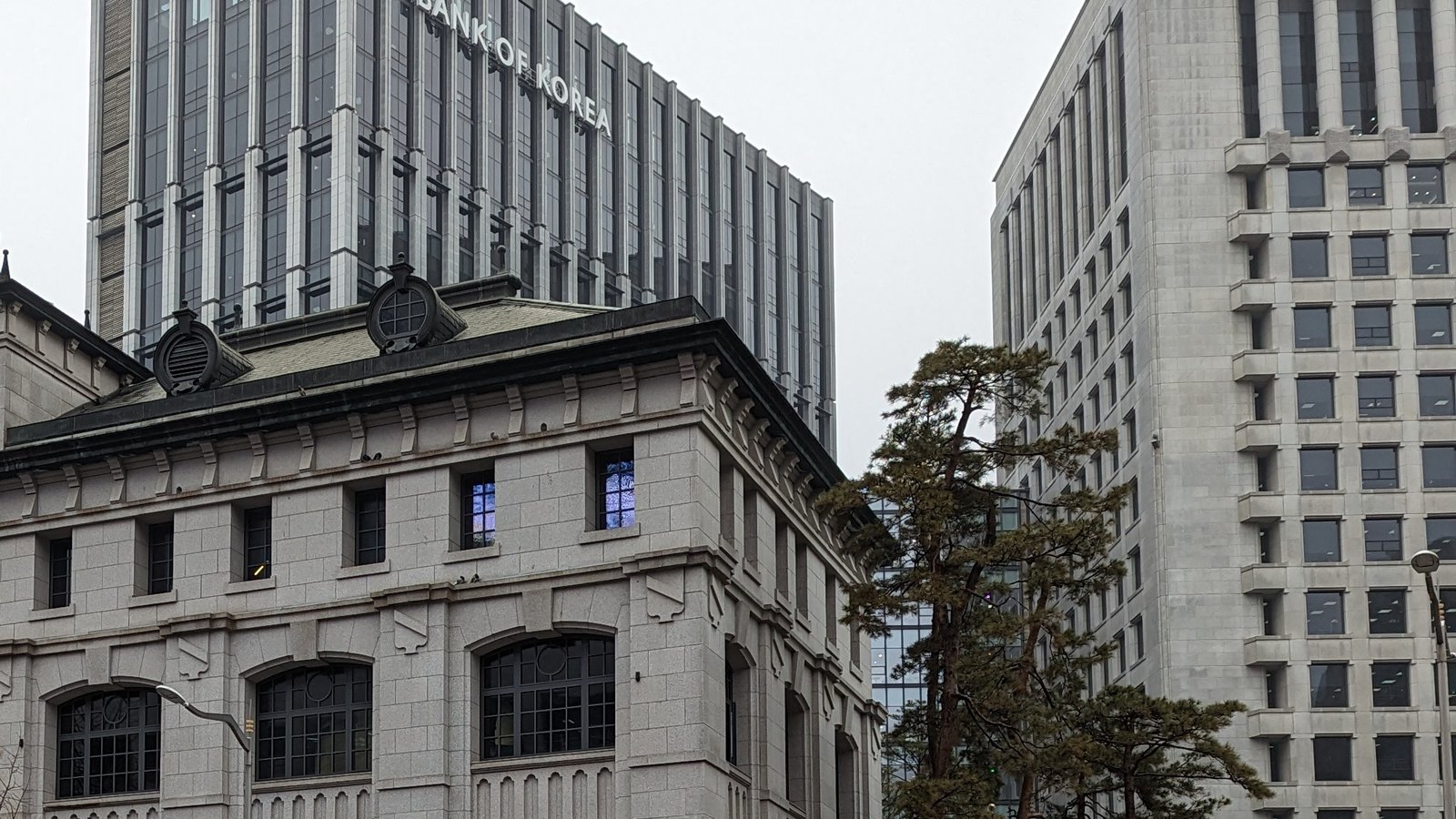
Three and a half years. That is how long the Bank of Korea went without raising its policy rate, from January 2023 until the middle of last month.
It has now raised twice in six weeks. The Monetary Policy Board lifted the Base Rate by 25 basis points on Thursday morning in Seoul, from 2.75 percent to 3.00 percent, putting it back where it last sat between November 2024 and February 2025. Six members voted for the increase. Hwang Kunil voted against it and proposed holding at 2.75 percent.
The number that moved was growth
The Bank revises its forecasts alongside the August decision, and the revision is the largest thing in the document.
Growth is now put at 3.3 percent for this year and 2.9 percent for next year. In May the same two figures were 2.6 percent and 2.1 percent. That is 0.7 points added to 2026 and 0.8 points added to 2027 in three months, and the Bank attributes it to a semiconductor sector that has run stronger than it expected, to the exports and investment that follow from it, and to a recovery in consumption it expects to strengthen as incomes improve.
The inflation forecast did not move at all. Consumer price inflation is put at 2.7 percent this year and 2.3 percent next year, both of which the document states are consistent with the May projections. The Governor gave the reason in his opening remarks: stronger growth pushes demand-side pressure up, lower global oil prices push the other way, and the two offset each other.
The case for raising sits in the core figure
Headline inflation fell in July, to 2.8 percent, as petroleum and agricultural prices rose more slowly. Core inflation, which strips out food and energy, went the other way and rose to 2.6 percent on personal services and durable goods.
That split is what the Board acted on. Core is now forecast at 2.5 percent for both this year and next, above the May forecasts of 2.4 percent and 2.3 percent, and the Governor said the significance of core staying high into next year is that inflation "has become more likely to spread widely and persist for longer."
His defence of moving early rather than late was explicit, and it carries the whole decision: preemptive action settles expectations sooner, which reduces how far and how long rates have to go, and so costs less growth in the end than waiting does.
Housing, and the rate that stayed still
The financial stability half of the reasoning is domestic and concrete. Housing prices in Seoul and its surrounding areas are still rising at a high pace, the Governor said, although the pace has slowed somewhat in some parts of the city, and household loans grew faster than in previous years with both housing-related and other lending increasing.
One rate was deliberately left alone. The Board held the interest rate on programmes under the Bank Intermediated Lending Support Facility at 1.25 percent while raising the Base Rate, and expects that, alongside the government own support measures, to ease the financial burden on small and medium-sized enterprises.
On what comes next the statement commits to a direction and not to a date. The Board will determine the timing and pace of further Base Rate increases based on incoming data.