Virginia's data center tax break costs $1.9bn a year, or $1.6bn, or less than nothing
Virginia's own documents put three different prices on the same sales tax exemption. The gap between them is the argument lawmakers are now having.
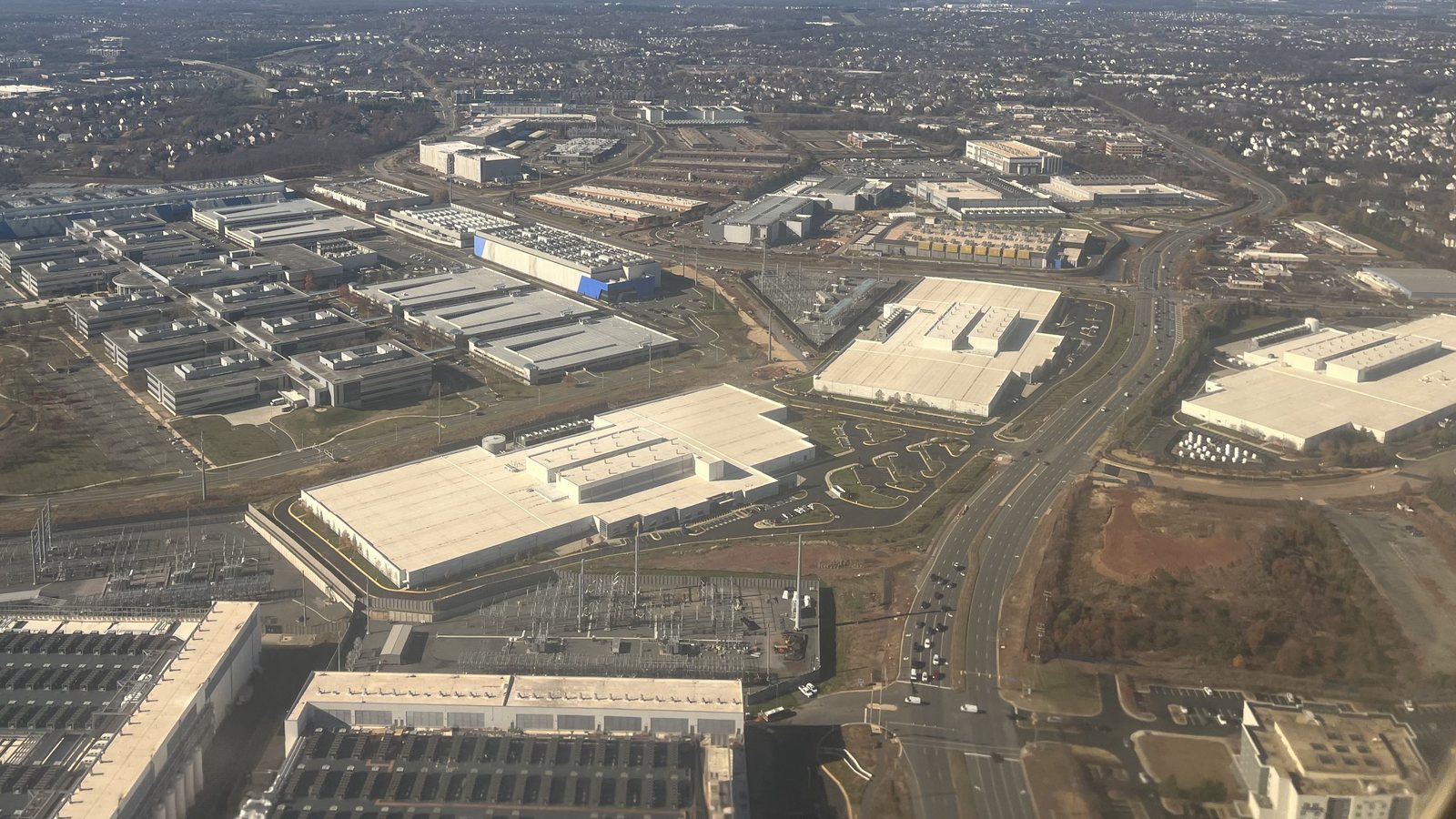
Data center operators told Virginia that its sales tax exemption saved them $1.94bn in the year to June 2025. The state's audited financial statements, covering the same twelve months, put the abated tax at $1.6bn. The state's own development agency, reading the same company reports, concluded that the exemption leaves Virginia and its localities better off by $2.1bn over five years.
All three numbers come from official documents. None of them is wrong on its own terms. Together they show why the question "what does a data center tax break cost" has no single answer, and why the answer a reader accepts depends on an assumption that no filing can prove.
The figures come from the biennial exemption report that the Virginia Department of Taxation and the Virginia Economic Development Partnership (VEDP) sent to the General Assembly on January 2, 2026, from Note 30 of the Commonwealth's annual comprehensive financial report for fiscal 2025, and from the December 2024 Data Centers in Virginia study by the Joint Legislative Audit and Review Commission (JLARC). Virginia is the case because it is the largest market and because its law forces the numbers into the open.
What are data center tax breaks?
Data center tax breaks are state and local tax reductions offered to attract server farms. The most common is a sales and use tax exemption on servers, networking gear, cooling equipment and backup generators. Localities add property tax abatements or low rates on computer equipment. JLARC counted 34 states with a data center sales tax exemption, plus four with no sales tax.
The sales tax exemption dominates because of what a data center buys. A building is put up once. The computers inside it are replaced roughly every five years, and each refresh is another round of taxable purchases that the exemption removes.
Virginia adopted its first exemption in 2008, for a single project. The statewide version dates from 2010. The current text sits in Code of Virginia section 58.1-609.3(18). It covers computer equipment and enabling software "for the processing, storage, retrieval, or communication of data," and names servers, routers, chillers and backup generators among the qualifying items.
Two things are excluded by the same sentence. Software sold separately from the hardware stays taxable. So do "general building improvements or other fixtures." That exclusion is the first reason announced investment and forgone tax diverge, and it is the reason the next section exists.
Qualifying is a contract, not an application form. An operator signs a memorandum of understanding with VEDP and commits to a new capital investment of at least $150m and at least 50 new jobs paying 1.5 times the prevailing average wage in the locality. In a locality the statute defines as distressed, the thresholds fall to 10 jobs and $70m. Tenants of a colocation facility can count toward the totals with the operator, a change made in 2012.
Why does announced investment overstate the taxed base?
A headline investment figure mixes land, buildings and site work with the equipment that actually qualifies. In fiscal 2025, Virginia operators reported $48.6bn of total investment, of which $33.2bn was exempt equipment and software. The tax benefit is calculated on that $33.2bn alone, not on the announced total.
The Department of Taxation report breaks the investment down line by line. The table below reproduces it in millions of dollars.
| Reported by exemption users, $m | FY2024 | FY2025 |
|---|---|---|
| Land and building acquisition | 1,928 | 1,438 |
| Site improvements | 102 | 2,476 |
| Real property and building improvements | 6,634 | 10,429 |
| Taxable tangible property | 906 | 821 |
| Exempt equipment or software | 21,668 | 33,177 |
| Other investment | 761 | 227 |
| Total investment | 31,999 | 48,569 |
| Reported tax benefit | 1,292 | 1,941 |
Source: Virginia Department of Taxation and VEDP, Biennial Data Center Retail Sales and Use Tax Exemption Report, January 2, 2026, Table 1. Figures rounded.
Exempt equipment was 68 percent of total investment in both years. Buildings, land and site work made up most of the rest, and they paid whatever taxes they would have paid anyway, including local real estate tax.
Divide the benefit by the exempt base and the result is 5.97 percent for fiscal 2024 and 5.85 percent for fiscal 2025. Those effective rates sit just under the 6.0 percent combined sales tax rate that applies in Northern Virginia, where JLARC found the industry's economic impact is concentrated. The ACFR lists the combined rates: 6.0 percent in Northern Virginia, Hampton Roads and Central Virginia, 7.0 percent in the Historic Triangle, 6.3 percent in Danville and seven named counties, and 5.3 percent everywhere else.
The practical rule for reading an announcement is simple. A press release that says a company will invest $10bn in a Virginia campus does not mean $600m of sales tax is being waived. The figure depends on how much of the $10bn is computers, and how often they are replaced over the life of the agreement.
JLARC worked one example. A modern 250,000 square foot data center costing $250m to $325m to build and equip would receive an initial benefit of about $9m to $15.5m, depending on the locality. The larger savings come later, at each refresh.
How much does Virginia's data center exemption cost?
Data center operators reported a tax benefit of $1.94bn for fiscal 2025, up from $1.29bn the year before. That figure counts state, regional and local sales tax together. The Commonwealth's audited accounts estimate the abated tax for the same year at $1.6bn. JLARC put the fiscal 2023 benefit at $928.6m, of which about $683m was the state's share.
Four years of the reported benefit show how fast the cost has grown. Legislative staff charted it for the Joint Subcommittee on Tax Policy on August 19, 2026, using the Department of Taxation's reports.
| Fiscal year | Reported exemption value |
|---|---|
| 2022 | $673.5m |
| 2023 | $903.5m |
| 2024 | $1,292.5m |
| 2025 | $1,941.4m |
Source: House Appropriations and Senate Finance and Appropriations Committee staff, presentation to the Joint Subcommittee on Tax Policy, August 19, 2026, citing Virginia Tax reports. Values include the 1 percent local sales tax and regional add-ons.
The increase from 2022 to 2025 is 188 percent. The same presentation cites JLARC's earlier estimate that the exemption averaged about $104m a year between fiscal 2012 and 2021. The benefit in fiscal 2025 alone was more than eighteen times that average.
The three official totals do not reconcile, and the documents do not explain the gaps. The Department of Taxation report states that its figure is self-reported by operators and "was not independently validated" by either agency. JLARC's $928.6m for fiscal 2023 is also drawn from operator reports to VEDP, yet the Department of Taxation series shows $903.5m for the same year. The ACFR note gives $1.6bn for fiscal 2025 as an estimate, without saying how it was built, about $340m below the operator-reported figure.
A careful reader should therefore treat $1.9bn as the ceiling on what operators say they saved, and $1.6bn as what the Comptroller was willing to put in audited statements. Neither is the state's own loss. JLARC separated that piece for fiscal 2023: about $683m of the $928.6m came out of state revenue, and the rest out of local and regional shares.
Scale is the other way to read it. The ACFR lists every Virginia tax abatement above $1m. The second entry, the motion picture production credit, abated $3.5m in fiscal 2025. JLARC found the next largest economic development incentive after the data center exemption was worth $74m in fiscal 2023.
The benefit is also concentrated. JLARC reported that about 30 companies claimed the exemption in fiscal 2023 and that most of the savings went to a small number of them. The median company still saved $5.4m, and all but six saved $1m or more.
Does the exemption pay for itself?
Only under a strong assumption. VEDP estimates that investments made in fiscal 2024 and 2025 will produce $5.35bn of state and local tax over five years, against $3.23bn of exemption benefit, a net gain of $2.1bn. JLARC, counting only state revenue, found the exemption returns 48 cents for every dollar it costs.
The two answers differ because they ask different questions.
JLARC's 48 cents is the state's return in revenue per dollar of state cost, taken from its Economic Development Incentives 2024 analysis. On that measure the data center exemption sits slightly above the 41 cent average for Virginia's incentives. JLARC's verdict was "moderate" benefits, and it said plainly that, like most incentives, the exemption "does not pay for itself" on the state's own books.
VEDP's model counts more. It adds local revenue, chiefly real estate and business personal property tax on the buildings and machines, which JLARC treats separately. Local tax is large. JLARC found data centers produced 31 percent of all local tax revenue in Loudoun County in fiscal 2023, and 7 percent in Prince William County.
| Five-year estimate, investments of FY2024 and FY2025 | $m |
|---|---|
| State tax revenue | 1,720 |
| Local tax revenue | 3,626 |
| Total tax revenue | 5,346 |
| Exemption benefit reported | 3,234 |
| Net tax revenue | 2,112 |
| Revenue-to-cost ratio | 1.7 |
Source: Virginia Department of Taxation and VEDP, Biennial report, January 2, 2026, Table 2. Figures rounded.
Then comes the step that decides everything. A tax break only costs the state what it would otherwise have collected. If the data centers would have come to Virginia anyway, the revenue in the table would have arrived without the exemption, and the whole $3.23bn is simply given away. If they would have gone elsewhere, the state collects the revenue only because of the break.
VEDP adopts JLARC's 2019 estimate that 90 percent of the investment "would not have occurred in Virginia without the exemption." On that assumption, the report calculates that removing the exemption would cut net state and local revenue by about $1.25bn over five years, because Virginia would keep only a tenth of the investment, and would tax that tenth in full.
The answer is sensitive to that one number. Using the report's own totals, the exemption breaks even when about 75 percent of the investment depends on it. Below that share, the state and its localities would collect more without the exemption than with it. Above it, the exemption earns its keep on VEDP's measure. That threshold is a Money & World calculation from Table 2, not a figure either agency published.
No document can settle the true share. JLARC's own 2024 report described the exemption as "likely" to affect location decisions and said it is "impossible to precisely determine" how much. Data center companies told JLARC the exemption is a key consideration, alongside access to power, available land and workforce quality, none of which a tax statute supplies. Every published return figure in this debate rests on the but-for share, and every party to the debate has a reason to pick theirs.
Who qualifies, and for how long?
Operators qualify by signing a memorandum of understanding with VEDP that commits to at least $150m of new investment and 50 new jobs at 1.5 times the local prevailing wage. The exemption runs until June 30, 2035. Operators that commit $35bn and 1,000 jobs can keep it to 2040, and those that commit $100bn and 2,500 jobs can keep it to 2050.
The extensions in subdivision 19 were added in 2023. The legislative staff presentation records that the package was originally built for Amazon Web Services; the statute itself names no company. A qualifying operator must sign its extension agreement on or after January 1, 2023, and at least 100 of the jobs must pay 1.5 times the statewide average wage.
The jobs threshold looks small next to the money. In fiscal 2025, operators reported 1,610 net new jobs and a $1.94bn benefit, which works out to about $1.2m of exemption per new job. That ratio overstates the cost of each job, because much of the benefit pays for refreshing equipment that supports the 7,785 jobs operators already reported. It is a fair measure of how little the statute asks in employment terms for each dollar it gives. VEDP's covering letter puts the average salary of the new jobs at nearly $120,000.
There is also an obligation that did not exist before 2021. Since then every operator claiming the exemption must file an annual report with VEDP listing jobs, investment, wages, qualifying expenses and the tax benefit. Before that requirement, VEDP's covering letter says, the value of equipment reinvestment was unknown. JLARC flagged that its 2024 estimates of the exemption's cost were higher than those reported in earlier years, now that operators must report. Part of the jump after 2021 is the state starting to count.
What changed in 2026?
Virginia kept the exemption but added a separate electricity tax and a formal review. The 2026 budget imposes a data center electricity consumption tax of $0.011 per kilowatt hour in fiscal 2027 and 2028. No more than $600m goes to the general fund; any excess is refunded to payers pro rata.
The tax runs for two fiscal years, the twelve-month periods beginning July 1, 2026 and July 1, 2027. With the general fund share capped at $600m, the state's maximum take is equal to about 31 percent of the $1.94bn exemption benefit operators reported for fiscal 2025. The two are not linked in the budget language. Nothing in the electricity tax changes who qualifies for the sales tax exemption or how it is calculated.
The same budget language directs the Joint Subcommittee on Tax Policy to review the exemption, the approaches other states take, the 2024 JLARC options and "mechanisms to provide direct revenue to the state" from the industry. Its recommendations are due by December 15, 2026. That date, more than any figure above, is the one that matters for the next change to the law.
The budget also sets water conditions for new data centers in groundwater management areas, directs the Department of Environmental Quality to adopt noise standards, and requires the State Corporation Commission to collect data on energy, water and generator use. Those provisions sit outside the tax code, but they belong to the same bargain.
Are other states pulling back?
Some are. Illinois stopped processing applications for its data center incentive program as of July 1, 2026, following a June 5 directive from the governor, according to the state's commerce department. Most states still offer a sales tax exemption, and JLARC found every state bordering Virginia does.
The Illinois program page set a higher entry bar than Virginia's: $250m of investment over 60 months and at least 20 new jobs paying 120 percent of the median wage, along with a construction wage credit in underserved areas. Its suspension is an administrative stop on new applications, not a repeal recorded in the page itself.
Comparisons across states are harder than they look. A state with a low sales tax rate gives up less per server than one with a high rate. A state with no sales tax at all, such as Oregon, offers the same effect without any line in its budget. And the size of a state's cost is driven less by the generosity of its statute than by how much equipment arrives. Virginia's exemption is not unusually generous on paper. It is expensive because Northern Virginia is, in JLARC's words, the largest data center market in the world.
That is also why the figures on this page should not be read as a national estimate. They describe one state's law, applied to one state's investment boom, measured by its own agencies. For what the equipment costs and how much power it draws, see our earlier pieces on the cost of building a data center and data center electricity use.
What does this mean for a Virginia taxpayer?
Directly, very little in the short run. The exemption does not raise anyone's sales tax rate. Its cost shows up as revenue the state and localities did not collect, set against property tax that data centers do pay. In Loudoun and Prince William, local officials told JLARC that data center revenue helped them lower real estate tax rates.
The distribution is uneven. Most of the state revenue gain from data centers comes through income and sales taxes on workers, while most of the local gain comes through property tax in the counties that host the buildings. The forgone sales tax, by contrast, includes the state share that would have gone to the general fund for everyone. A county with no data centers bears part of the state cost and receives none of the local revenue.
Local rates vary just as widely. JLARC calculated that a data center with $150m of taxable computer equipment would pay anywhere from $10.8m to $0.4m in business personal property tax over five years, depending on the county's rate and depreciation schedule. The state exemption is uniform. The local deal is not.
Frequently asked questions
What equipment does Virginia's data center sales tax exemption cover?
It covers computer equipment and enabling software bought or leased for processing, storing, retrieving or communicating data, including servers, routers, connections, chillers and backup generators. It also covers replacement and upgrade purchases. It does not cover separately sold software, general building improvements or fixtures, according to Code of Virginia section 58.1-609.3(18).
How much did Virginia's data center tax exemption cost in 2025?
Operators reported a benefit of $1.94bn for fiscal 2025, the year ended June 30, 2025, counting state, regional and local sales tax. The Commonwealth's audited financial report estimated the abated tax at $1.6bn for the same year. Neither figure has been independently validated against purchase records.
When does Virginia's data center tax break expire?
The exemption ends on June 30, 2035. Operators that sign an agreement with VEDP and invest at least $35bn with 1,000 new jobs can keep it until June 30, 2040. Those reaching $100bn and 2,500 jobs can keep it until June 30, 2050.
How many states give data centers a sales tax break?
JLARC's 2024 study counted 34 states with a data center sales tax exemption and four states with no sales tax, which has a similar effect. Illinois stopped accepting new applications for its program as of July 1, 2026.
Do data centers pay any tax in Virginia?
Yes. They pay local real estate tax on land and buildings and business personal property tax on equipment, at rates each locality sets. JLARC found data centers produced 31 percent of Loudoun County's total local tax revenue in fiscal 2023. From fiscal 2027, they also pay the new electricity consumption tax.