Treasury
3-MO 3.83% +1bp 6-MO 3.98% unch 1-YR 4.08% +4bp 2-YR 4.28% +5bp 3-YR 4.34% +4bp 5-YR 4.45% +7bp 7-YR 4.59% +7bp 10-YR 4.75% +7bp 20-YR 5.28% +6bp 30-YR 5.27% +6bp 3-MO 3.83% +1bp 6-MO 3.98% unch 1-YR 4.08% +4bp 2-YR 4.28% +5bp 3-YR 4.34% +4bp 5-YR 4.45% +7bp 7-YR 4.59% +7bp 10-YR 4.75% +7bp 20-YR 5.28% +6bp 30-YR 5.27% +6bp 3-MO 3.83% +1bp 6-MO 3.98% unch 1-YR 4.08% +4bp 2-YR 4.28% +5bp 3-YR 4.34% +4bp 5-YR 4.45% +7bp 7-YR 4.59% +7bp 10-YR 4.75% +7bp 20-YR 5.28% +6bp 30-YR 5.27% +6bp 3-MO 3.83% +1bp 6-MO 3.98% unch 1-YR 4.08% +4bp 2-YR 4.28% +5bp 3-YR 4.34% +4bp 5-YR 4.45% +7bp 7-YR 4.59% +7bp 10-YR 4.75% +7bp 20-YR 5.28% +6bp 30-YR 5.27% +6bp 3-MO 3.83% +1bp 6-MO 3.98% unch 1-YR 4.08% +4bp 2-YR 4.28% +5bp 3-YR 4.34% +4bp 5-YR 4.45% +7bp 7-YR 4.59% +7bp 10-YR 4.75% +7bp 20-YR 5.28% +6bp 30-YR 5.27% +6bp 3-MO 3.83% +1bp 6-MO 3.98% unch 1-YR 4.08% +4bp 2-YR 4.28% +5bp 3-YR 4.34% +4bp 5-YR 4.45% +7bp 7-YR 4.59% +7bp 10-YR 4.75% +7bp 20-YR 5.28% +6bp 30-YR 5.27% +6bp
US Treasury par yield curve · Jul 31 · Source: U.S. Treasury
Sunday, August 2, 2026
U.S. Edition
Nuclear ministerial council

Japan has written a reactor rebuild number into its nuclear guideline for the first time, and the sentence about reducing dependence on nuclear power is gone
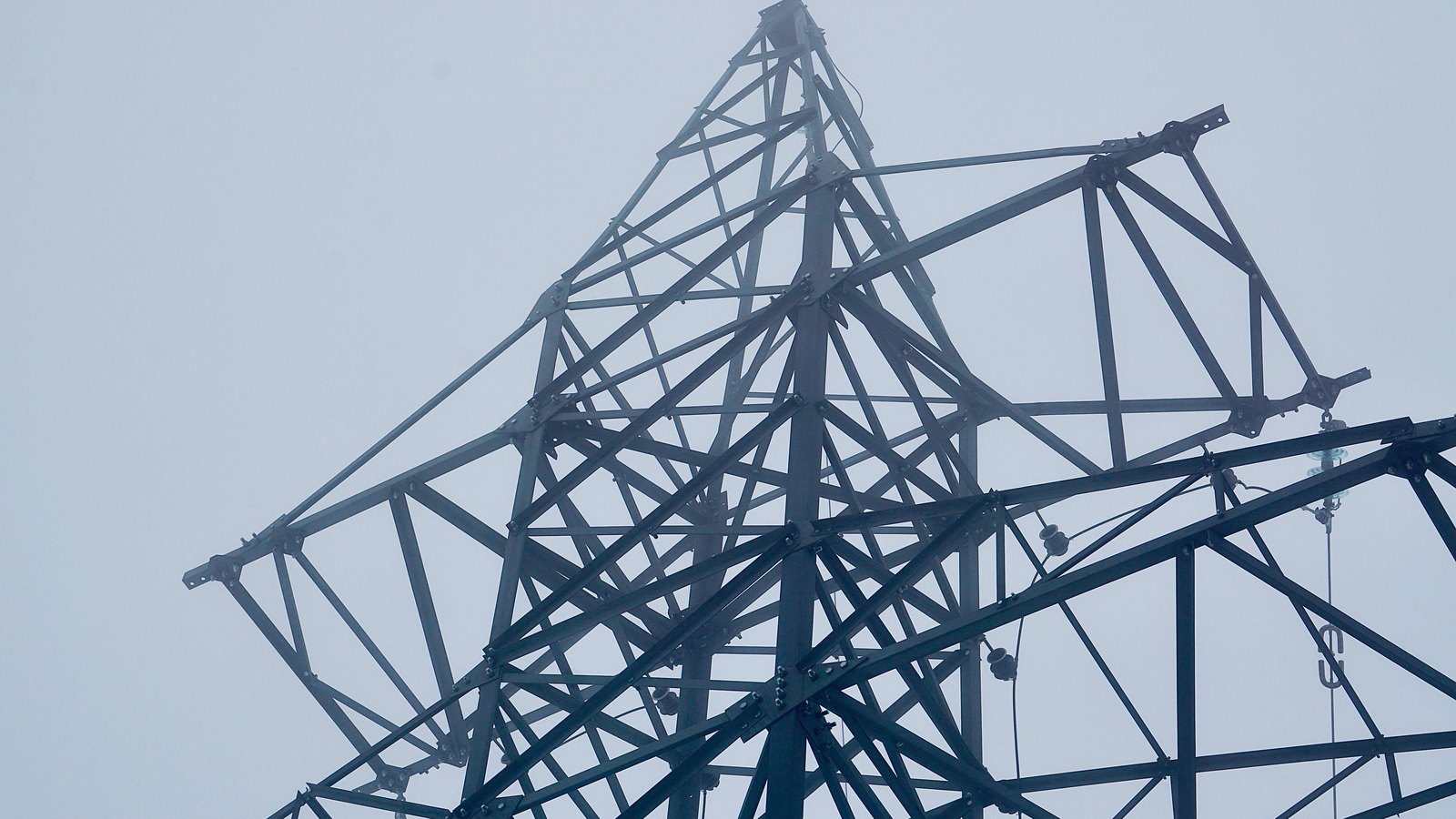
A low angle photograph of the upper part of a steel lattice electricity transmission tower against a flat pale grey sky. Cross braced angle iron members converge at the peak, bolted plates and small insulator fittings hang from the lower arms, and the far side of the structure fades into haze. No text, marking, brand, person or place is in view.
Photo: Anna Romanova / Pexels

A sentence is missing from Japan's nuclear guideline.

The 2023 version conditioned new reactor construction on what it called the current policy of reducing dependence on nuclear power compared with the period before the 2011 earthquake. The version the relevant ministers adopted on 31 July does not contain that clause. It does contain something the earlier document never had, which is a number.

The number, and the base

The amended guideline estimates that about 2.20 million to 5.50 million kW of nuclear capacity, or about 2 to 5 units, needs rebuilding by the 2040s, and about 12.70 million to 16.00 million kW, or about 11 to 14 units, by the 2050s counting the 2040s portion inside it.

The base is the point. Search the 2023 document for the unit 万kW and it appears zero times across 21 pages. Search the amended one and it appears seven times. Japan has been running a nuclear policy of directions and intentions for three years, and this is the week a quantity entered it.

The reason given is arithmetic rather than ambition. More than 3.00 million kW of the existing fleet reaches the 60 year operating limit before 2040, and the 2040 energy mix assumes nuclear supplies about 20 percent of a grid generating 1.1 trillion to 1.2 trillion kWh.

The assumptions are printed, which is the unusual part

Under a heading translating as basis of calculation, the document sets out what it assumed.

Nuclear is taken to run at a 70 percent capacity factor. Units are counted in large reactor equivalent at 1.20 million kW each, and the document notes that at 300,000 kW per small modular reactor, four of those are needed to replace one large one. Plants that pass 60 years part way through a year are not counted in that year. The three units already under construction, Oma, Shimane 3 and Tepco Higashidori, are counted in the operable capacity.

One line does more work than the rest. The approval system that lets a reactor run past its licensed term under the Electricity Business Act is explicitly not taken into account. Every extension granted in the years ahead cuts into the figure the same document is asking the industry to plan against.

The other change to the sentence

The 2023 text limited concrete new build to a next generation reactor built inside the site of a plant whose decommissioning had been decided. The amended text applies instead to sites held by an operator that has decided to decommission a plant.

For a company with one nuclear site those readings are identical. For a company with several they are not.

Why this is running late

The meeting was the fourteenth of the council, it ran from 17:55 to 18:06 on Friday evening in Tokyo, and it is roughly 41 hours old at the moment this publishes. It runs anyway, because the document sitting under the wire coverage has not been read out loud anywhere this desk can find, and the arithmetic in it is the part that determines whether the range survives contact with the next capacity factor revision.

It is also worth saying what the document is not. A ministerial council is not the Cabinet, and a partial amendment to a guideline is not a decision to build anything. Nothing has been ordered.
The document: Cabinet Secretariat of Japan, 今後の原子力政策の方向性と行動指針 (Direction and Action Guidelines for Future Nuclear Policy), adopted 28 April 2023, partially amended 31 July 2026 by the 原子力関係閣僚会議 (Nuclear Energy Related Ministerial Council). The amended document was downloaded from cas.go.jp as a PDF of 402,813 bytes, 24 pages, and extracted to text here; no fetch-tool summary of it was relied on at any point, and every figure below was read in the extracted text. The 2023 original was downloaded separately from the same directory as pdf/r510418_siryou.pdf, 490,331 bytes, 21 pages, and extracted the same way, so the comparisons below are between two documents this desk holds rather than between one document and a description of another. Verified in the amended text: 2040 fiscal year generation is projected at 1.1 trillion to 1.2 trillion kWh with nuclear at about 20 percent of the mix; more than 3.00 million kW of existing reactors reach the 60 year operating period before 2040; the estimate is about 2.20 million to 5.50 million kW, or about 2 to 5 units, by the 2040s, and about 12.70 million to 16.00 million kW, or about 11 to 14 units, by the 2050s including the 2040s portion. The stated basis of that estimate, printed in the document under the heading 算出根拠: nuclear is assumed to supply 20 percent of 1.1 trillion to 1.2 trillion kWh across the 2040s and 2050s; the requirement is the difference against domestically operable capacity at the 2040 and 2050 cross-sections assuming 60 year operation; the capacity factor is assumed at 70 percent; unit counts are computed in large reactor equivalent at 1.20 million kW per unit; and where an SMR is taken at 300,000 kW per unit, four SMRs are required to match one large reactor. Under 運転可能な設備容量の考え方 the document further states that a plant reaching 60 years part way through a year is not counted in that year's capacity, that the three units under construction (Oma, Shimane 3 and Tepco Higashidori) are counted, and that the operating extension approval system under the Electricity Business Act is not taken into account. The textual comparison against the 2023 original was performed by string count rather than by impression: 万kW appears 7 times in the 2026 amendment and 0 times in the 2023 original; 建て替え appears 6 times against 1; 依存度低減 appears 0 times against 1; 可能な限り appears 0 times against 1. The single 2023 instance of 依存度低減 sits in section (3)①, in the clause 震災前と比較した依存度低減という現在の方針も踏まえ. The corresponding 2026 sentence drops that clause and changes the siting scope from 廃炉を決定した原発の敷地内 to 廃炉を決定した原子力発電所を有する事業者の原子力発電所のサイト内. Section (0), 原子力発電の見通し・将来像, has no counterpart in the 2023 document. The meeting record was read separately at dai14/gijisidai.html: the 14th meeting of the council, 31 July 2026, 17:55 to 18:06, second floor small hall of the prime minister's office, agenda item 今後の原子力政策について, with six documents distributed. A search result for this story initially returned dai5/gijisidai.html, which is the 5th meeting, 21 September 2016, on fast reactor development; that page was opened and discarded rather than cited, and it is recorded here because it is the exact failure RULEBOOK section 2a describes. This item quotes no individual, asserts no conduct by any party, and contains no allegation..