Customs officers may now board a vessel twice as far out to sea off four American coasts, and the authority doing it was written in 1935
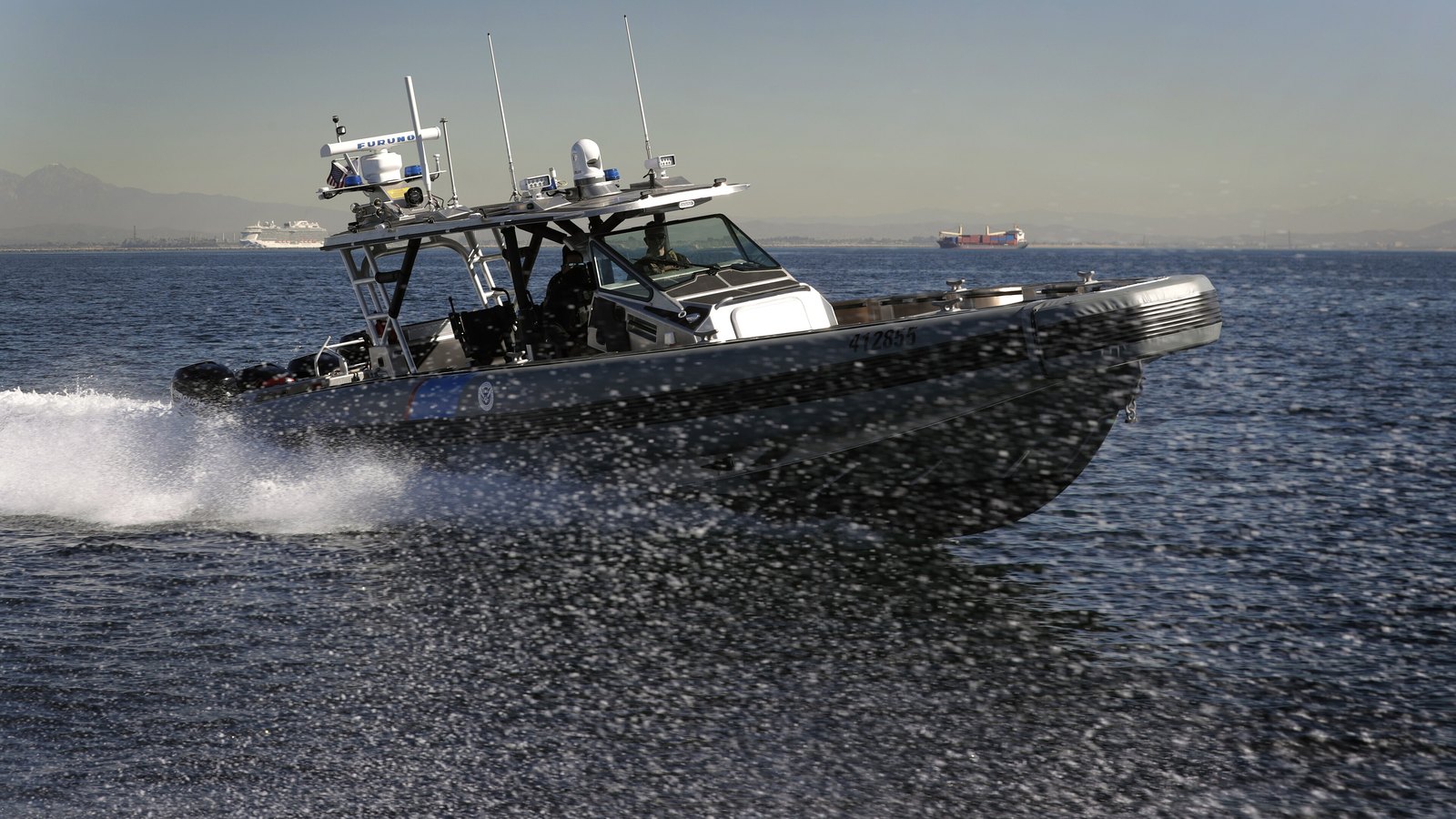
Twelve nautical miles was the old limit. From Tuesday it is twenty four, off four stretches of American coast.
The Commissioner of U.S. Customs and Border Protection, Rodney S. Scott, has declared four Customs-Enforcement Areas in the near shore waters of South Florida, the Gulf Coast of Texas, central and southern California, and Puerto Rico. Inside them, customs officers and agents may board any vessel, examine it and anyone aboard, search it, bring it into port, and pursue, seize and arrest. The declaration takes effect on the day it publishes in the Federal Register, which is Tuesday.
The power itself is old. It is section 1 of the Anti-Smuggling Act of 1935, which lets the President declare an area of the high seas next to customs waters where vessels are hovering, and which caps any such area at 100 nautical miles along the coast from where the hovering is found and at 50 nautical miles outward from the edge of customs waters. That presidential authority went to the Treasury Secretary by executive order in 1951, moved to Homeland Security with the rest of the Customs Service in 2002, and was delegated down to the CBP Commissioner in December 2024. Scott signed this declaration himself.
What the four areas cover
The line CBP calls South Florida is not only South Florida. It starts at the northeast corner of Brevard County on the Atlantic side, follows the coast down and around the Florida Keys, and ends at the northwest corner of Pasco County on the Gulf side, which puts almost the whole peninsula inside it.
The Texas area runs from the mouth of the Sabine River south along the Gulf Coast to the maritime boundary with Mexico. The California area begins at the Ano Nuevo Lighthouse, roughly halfway up the state, and runs south to the Mexican boundary, taking in eight islands: the five of Channel Islands National Park, plus San Clemente, Santa Catalina and San Nicolas. The Puerto Rico area encircles the island together with Mona, Desecheo, Vieques and Culebra, and stops short of any recognised international boundary line.
All four reach 24 nautical miles from the baseline. That is the outer edge of the United States contiguous zone, fixed by proclamation in 1999, and it is twice the 12 nautical mile territorial sea fixed by proclamation in 1988.
The four case files do not resemble each other
CBP sets out five years of Air and Marine Operations activity inside the areas, and the totals are wildly uneven.
Puerto Rico accounts for nearly 860,000 pounds of cocaine. South Florida accounts for nearly 77,000 pounds of illegal narcotics of every kind, about a ninth of the Puerto Rico cocaine figure, alongside 26,000 apprehensions of what the document calls illegal aliens and smugglers, and 324 search and rescue operations. Puerto Rico adds well over 15,000 apprehensions and 172 search and rescue operations of its own.
Then Texas. The Gulf Coast area produced 3,700 pounds of drugs and more than 17,000 apprehensions, which is more people stopped than in South Florida on a fraction of a percent of the Puerto Rico drug weight. Southern California produced nearly 1,500 pounds of methamphetamines and 5,145 pounds of other drugs. Across all four areas, 488 vessels were seized.
What it does not do
The document is explicit that establishing the areas closes no water to navigation, imposes no reporting or permitting requirement, and obliges no vessel to alter an otherwise lawful route. What it changes is reach. CBP writes that enforcement activity may in individual cases delay owners, operators, passengers and cargo interests, and that the possibility of those impacts is justified by the threat it describes.
One paragraph near the end reads as though written for a courtroom. Each area is intended to operate independently, CBP says, so if a court enjoins one of the four, or invalidates part of a single boundary, the remainder is intended to stay in force.
The declaration cites two executive orders, Securing Our Borders from January 2025 and Strengthening Customs Enforcement from June 2026, and the 2026 National Drug Control Strategy. No comment period is offered. This is a declaration, not a rule.