In Southwest Florida a condo's milestone inspection is a state requirement, but whether the clock starts at 25 years or 30 is a local decision.
The 30-year deadline is set by the state. The 25-year one is set by your county building official. The bill that follows a failed phase two is set by neither, and the first statewide count puts it between under $1,000 and $30 million.
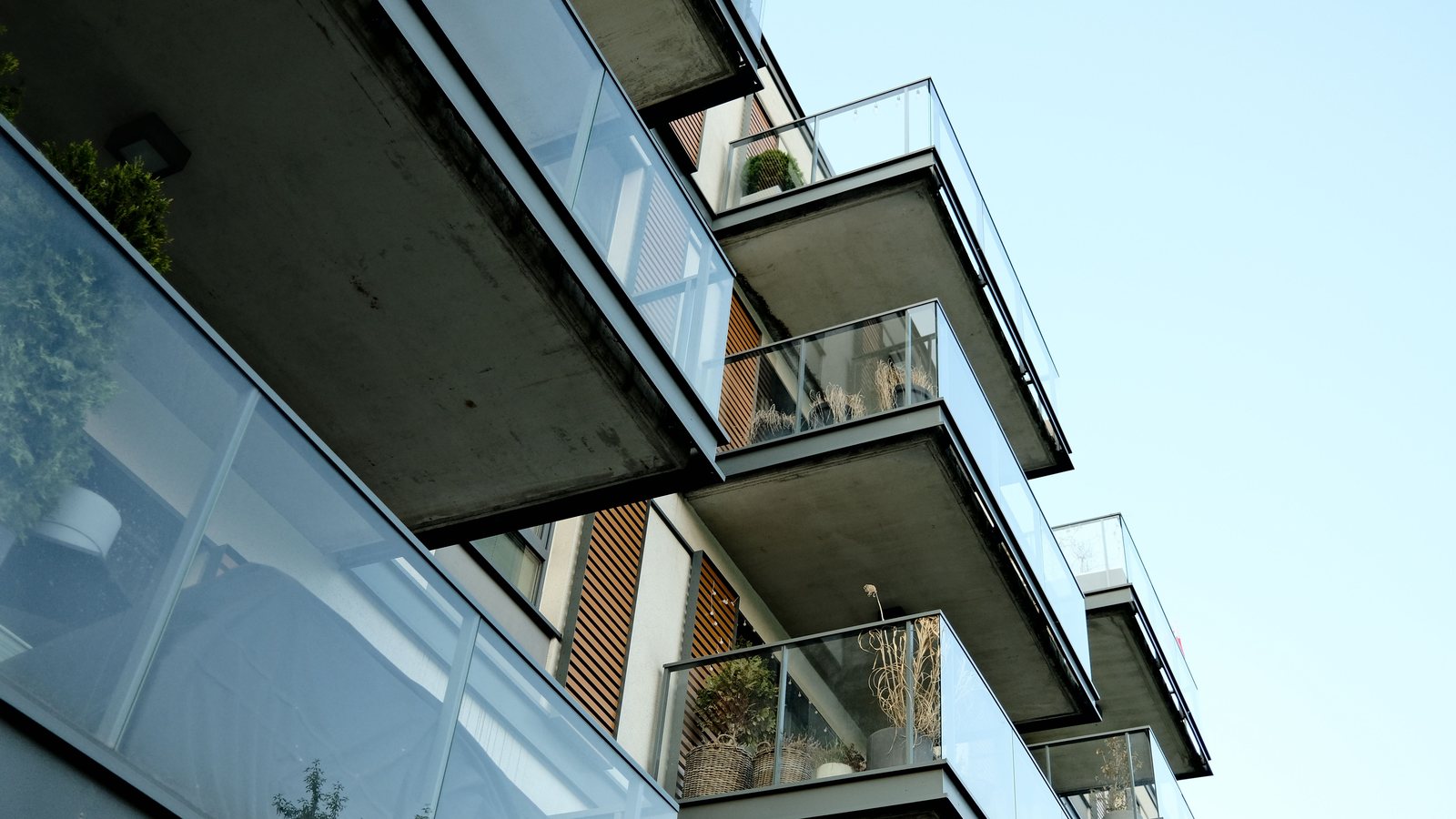 Stock photo
Eight thousand seven hundred and thirty-six. That is how many phase one milestone inspections Florida building officials reported completing in 2024 and 2025, the first two years the state kept the count, and the number is almost certainly low. It is low because roughly a third of the state's building departments did not file their data. The program that produced it is younger than the buildings it governs. Florida wrote the milestone inspection law in 2022, in the year after the Champlain Towers South collapse in Surfside killed 98 people, and the first hard compliance deadline fell only at the end of 2024.
For a condominium or cooperative owner in Collier or Lee County, the law is now a fixed feature of ownership rather than a headline. The obligation runs on a calendar. What the calendar says, and what happens when a building misses it, is worth reading from the statute itself rather than from a summary, because several of the guides that rank for it get one central fact wrong.
What is a milestone inspection, and which buildings need one?
A milestone inspection is a structural inspection of a building, performed by a Florida-licensed architect or engineer, to attest to the life safety and adequacy of the structure. Under Section 553.899, it is required for residential condominium and cooperative buildings that are three habitable stories or more in height. It is not a code-compliance check.
The statute is precise about scope, and the precision matters. It covers a building "subject, in whole or in part, to the condominium or cooperative form of ownership" under chapter 718 or chapter 719. It looks at load-bearing elements and the primary structural members and systems, the terms borrowed from the insurance statute at section 627.706. It explicitly does not apply to a single-family, two-family, three-family, or four-family dwelling with three or fewer habitable stories above ground. So the target is the mid-rise and high-rise residential building held in common ownership, which in Southwest Florida means a very large share of the coastal housing stock built during the growth decades.
One point the statute makes twice, because owners resist it: the inspection is not looking for cracked stucco or a sagging screen. It is looking for what the law calls "substantial structural deterioration," meaning distress or weakness that negatively affects the building's general structural condition. Surface imperfections do not count, unless the engineer decides they are a sign of something structural underneath.
Is a milestone inspection due at 25 years or 30 years?
Both, depending on where the building sits. The state default is 30 years of age, measured from the date the certificate of occupancy was issued, and every 10 years after that. A county or municipal building official may move the first inspection forward to 25 years for buildings subject to environmental conditions such as proximity to salt water. That local option is the fact most guides state incorrectly.
Read carelessly, the 25-year rule looks automatic for any building near the coast. It is not. The statute at subsection (3)(b) makes it a determination the local enforcement agency "may" make, not one the state imposes. Whether a given building owes its first inspection at 25 or 30 therefore depends on what the county decided, and Collier and Lee owners cannot answer it from the state statute alone.
Collier County answered it. In Ordinance No. 2023-41, filed with the Secretary of State on October 2, 2023, the county amended its original 2022 milestone ordinance to track the state law and kept the salt-water provision: for a building subject to environmental conditions such as proximity to salt water as defined in section 379.101, the building official may require the inspection at 25 years of age. For a beachfront tower on Marco Island or in Naples, that is a five-year acceleration of a very expensive obligation, and it is set at the county building department, not in Tallahassee.
The transition deadlines still apply underneath all of this. A building that reached its inspection age before July 1, 2022 owed its first milestone inspection by December 31, 2024. A building that reached 30 years between July 1, 2022 and December 31, 2024 owes it by December 31, 2025. Going forward, the deadline is simply December 31 of the year the building hits its trigger age.
What are the two phases, and what actually forces a phase two?
Phase one is a visual examination. A licensed architect or engineer walks the building, habitable and nonhabitable areas alike, and gives a qualitative assessment of the structure. If they find no sign of substantial structural deterioration, the inspection is finished. Phase two happens only when phase one turns something up, and it is the phase that carries the cost.
The distinction is the whole design of the law, and it is why the phase one number and the phase two number are so different. Of the roughly 8,700 phase one inspections completed in 2024 and 2025, only 1,575 escalated to a phase two, according to the OPPAGA report that compiled the state's data in July 2026. A phase two may involve destructive or nondestructive testing, and the engineer is directed to test where it is least disruptive and most easily repaired while still being representative. It is not a formality. It is the point at which a building learns what it is actually made of after 30 years in salt air.
What happens after the report, and what must owners be told?
The sequence is on a clock from the moment the building official mails notice. The association has 14 days to tell unit owners. Phase one must be completed within 180 days of the owners receiving that notice. Once a report is done, the association has 45 days to distribute the inspector's summary to every owner, post it on the property, and put the full report on the association website if it is required to have one.
That distribution rule is the part owners should not let a board soften. The law does not let the association keep a bad report quiet. Under subsection (9), the summary goes to every single unit owner "regardless of the findings or recommendations in the report," by mail and by electronic notice, and the full report and summary are published where owners can find them. For anyone buying into a Southwest Florida building, that published report is a document to ask for by name before closing, because it is the building telling on itself in the engineer's own words.
If a phase two is required, the engineer has 180 days after the phase one report to submit a phase two progress report to the building official with a timeline for finishing. The reporting standard is specific: the sealed report must identify any substantial structural deterioration, state whether unsafe or dangerous conditions were observed, and recommend the repairs.
What happens when a building fails, or repairs are needed?
Failure has a defined consequence, and it is occupancy. State law requires every county and municipality to adopt an ordinance forcing repairs for substantial structural deterioration to begin within 365 days of the building official receiving the phase two report. If an owner cannot show the building official that repairs have been scheduled or started within that window, the official "must review and determine if the building is unsafe for human occupancy."
Collier County added teeth of its own. Its ordinance keeps the 365-day commencement rule from the state, then layers a tighter operational deadline on top: once the phase two report is submitted, the association has 150 days to obtain the necessary permits and complete the indicated repairs. The engineer must also give the building official a letter stating whether the building can be safely occupied during the work, and that letter is valid for no more than 180 days before a new one is required. The through-line is that a Collier building cannot simply file a frightening phase two report and sit on it.
Here is the caveat that the raw deadlines hide. "Unsafe for human occupancy" is a determination the building official must make, not an automatic evacuation, and the statute leaves the term "uninhabitable" undefined. OPPAGA found building officials using different standards to reach it, some leaning on the Florida Building Code definition of "unsafe," some on local ordinances, some on the inspecting engineer's own judgment. The result is that the same phase two finding can land differently in two counties, which is a real limit on how uniformly this law protects anyone.
How many buildings have actually been inspected, and where is the risk?
The honest answer is that the state is still learning to count. Florida law only began requiring building officials to report milestone data to the Department of Business and Professional Regulation in 2025, and OPPAGA received 2024 data from 71 percent of the state's 389 jurisdictions and 2025 data from 64 percent. Every number below is therefore a floor. With that stated plainly, the shape of the data is clear.
The burden is overwhelmingly coastal, and overwhelmingly in the southeast. Of the phase two inspections required in 2024, 85 percent were for buildings in coastal counties and municipalities, and Broward, Miami-Dade, and Palm Beach counties reported the most, ranging from 218 to 543 buildings each. Extensions tell the same story: officials granted 1,587 extensions of the initial deadline across the two years, and 94 percent of them went to coastal jurisdictions, largely because owners could not find engineers fast enough. Southwest Florida's coastal counties, Lee and Collier among them, sat in the lower reporting bands, well under the southeast's totals.
The cost is in the repairs, not the inspection. Building officials reported 903 permit applications for repairs identified by phase two inspections in 2024 and 2025, and the estimated values ran from under $1,000 to $30 million. The average 2024 repair permit was $337,229, across 671 permits, and the average 2025 permit was $496,236, across 232. The most common repair types were concrete, electrical, and structural. Set against those figures, the fee for the inspection itself, which the statute assigns entirely to the association and does not cap, is the small number on the page.
The rarest outcome is the one the law was written for. Milestone inspections identified 30 buildings as unsafe or uninhabitable in 2024 and 24 in 2025, spread across eight counties, and most of them were not vacated. In 2024 the clusters were in Osceola, Pinellas, Brevard, Bay, and St. Lucie counties. In 2025 they were concentrated in Miami-Dade. That is the number that matters most and the one the reporting gaps most threaten, because a building that is never inspected never appears on it.
What does this mean for a Southwest Florida condominium owner?
If you own in a Collier or Lee mid-rise, three things follow. First, find your building's certificate of occupancy date and count. A 1996 coastal building in Collier may already be past a 25-year trigger the county can enforce, not the 30-year one you may be expecting. Second, when the phase one comes back, read whether it clears the building or flags substantial structural deterioration, because that single finding is what separates a closed file from a six-figure repair. Third, if you are on a board, treat the 45-day distribution and the repair clocks as the hard dates they are.
The milestone inspection is the structural half of Florida's post-Surfside condominium regime. The financial half is the structural integrity reserve study and the reserve-funding rules, which force associations to fund for the very repairs a phase two identifies. They were written to work together, one to find the deterioration and one to make sure the money to fix it exists. For a Southwest Florida building carrying both salt air and 30 years, they are the two documents that now decide what a unit is worth.
Frequently asked questions
Does every Florida condo need a milestone inspection? No. The requirement applies to residential condominium and cooperative buildings that are three habitable stories or more in height. Single-family, two-family, three-family, and four-family dwellings with three or fewer habitable stories above ground are excluded by the statute.
Is the milestone inspection required at 25 years for all coastal buildings? No, and this is the common error. The state default is 30 years. A local building official may require 25 years for buildings near salt water, but only if the county or city has adopted that option. Collier County adopted it in Ordinance 2023-41. Owners should confirm their own county's rule with the local building department.
Who pays for the milestone inspection? The condominium or cooperative association pays all costs attributable to the portions of the building it maintains under its governing documents. The statute does not cap the fee. The larger and less predictable cost is any repair a phase two inspection requires.
What happens if a building fails its milestone inspection? A phase two report identifying substantial structural deterioration starts a repair clock. Repairs must begin within 365 days of the building official receiving the report. If the owners cannot show repairs are scheduled or started, the building official must review whether the building is unsafe for human occupancy.
Where can I read the actual law? The milestone inspection requirement is Florida Statute 553.899. Collier County's local implementation is Ordinance No. 2023-41. The statewide compliance data is in OPPAGA Report 26-04, published July 2026.