Reclamation published two official 24-Month Studies this month instead of one, and by the end of next water year they stand fifteen feet apart at Lake Mead
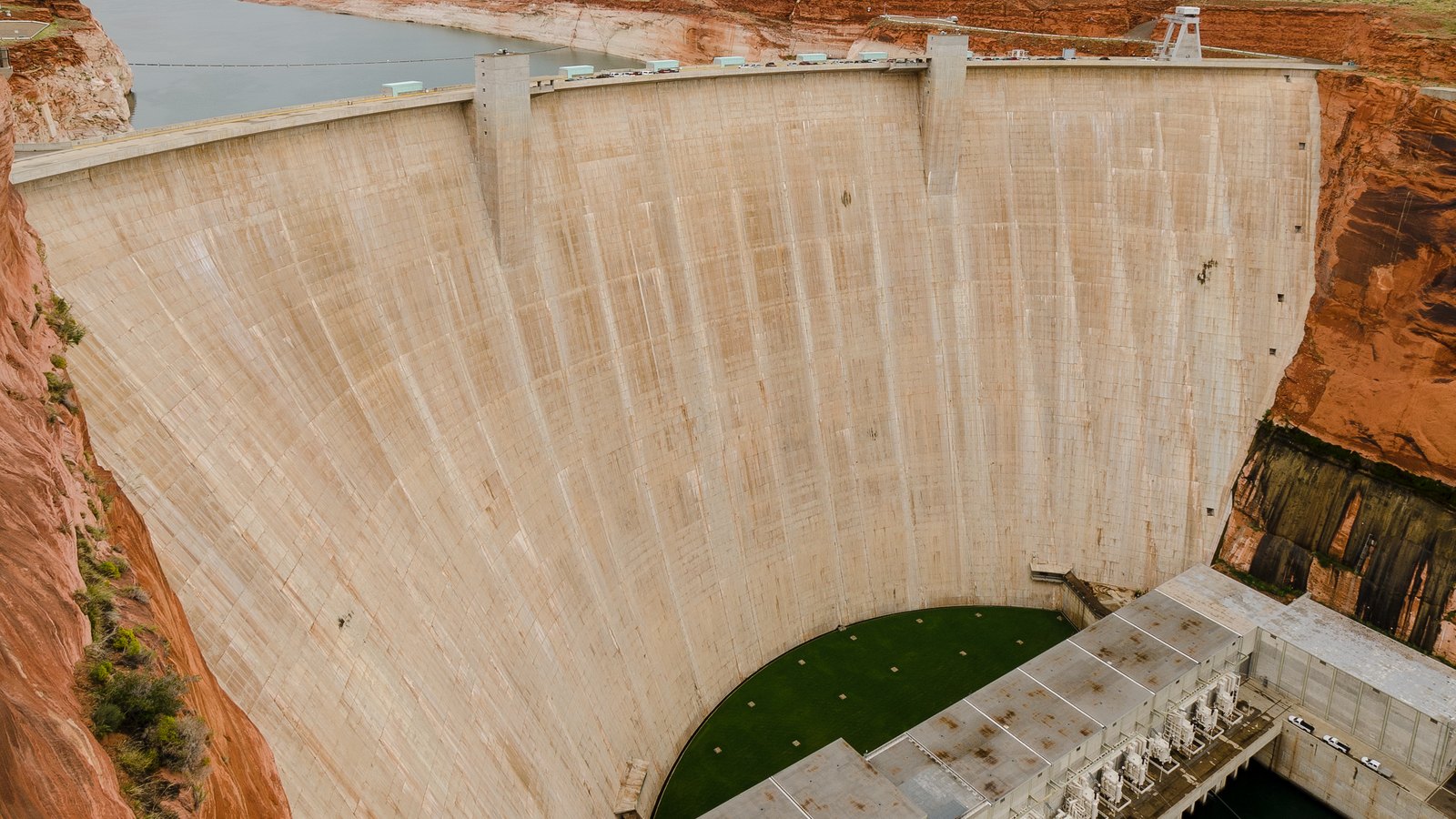
There are two August 24-Month Studies this year, and both of them are official.
Reclamation publishes one of these every month, and the August edition carries weight the others do not, because its projection of start-of-water-year elevations is what sets the coming year's operation of Lake Powell. This August it arrived in two versions, both dated 21 August, both headed Most Probable, one built on a 6.00 million acre-foot release from Powell in water year 2027 and one on 7.00 million.
The reason sits in the new guidelines. Powell's 1 October elevation is projected below 3,540 feet, and the reservoir is projected to fall below 3,510 feet during the water year, which under section 5.1.C.2 of the 2027-2028 Operating Guidelines puts it in the Low Elevation Infrastructure Protection Range. That range hands back a band rather than a number. The volume gets settled in April.
Identical, and then not
Put the two documents side by side and the monthly tables agree to the hundredth of a foot all the way through April 2027. Powell ends February 2027 at 3,511.70 feet in both. Mead ends April 2027 at 1,018.28 feet in both.
May is where they come apart.
Under the 6 maf release, Lake Mead ends water year 2027 at 1,008.53 feet. Under 7 maf it ends at 1,023.70. That is 15.17 feet of Lake Mead resting on a decision nobody has taken yet, and Powell moves almost exactly as far the other way, ending at 3,533.24 feet against 3,517.34.
Fifteen feet is not a rounding difference at these elevations. Both studies project Mead to fall 15.29 feet in the two months from the end of February 2027 to the end of April, so the choice deferred to April is worth about as much as a full spring drawdown.
The 3,510 line, and what is already counted
The narrative on page one of both studies says Powell is projected to decline below 3,510 feet during water year 2027. The most probable table inside the same file bottoms out at 3,511.70.
What sits in the gap is a rescue that has already been booked. As conditions deteriorated, Interior cut Powell's water year 2026 release from 7.48 million acre-feet to 6.00 million under section 6.E of the 2024 supplemental Record of Decision, and paired it with the 2026 Drought Response Operations Plan, which is to move between 660,000 acre-feet and 1.00 million from Flaming Gorge into Powell by April 2027. The August study assumes the full 1.00 million arrives.
Why the release stopped being arithmetic
Observed unregulated inflow to Lake Powell in July was 0.083 million acre-feet, which Reclamation puts at 9 percent of the 1991 to 2020 average.
Nine percent is not a dry month.
The preliminary April through July figure, the runoff season that fills the reservoir, is 1.14 million acre-feet, or 18 percent of average, and the full water year forecast is 3.58 million, or 37 percent. The 2027 operational determinations go into the Annual Operating Plan, which the study says is still in development.