The Bank of Japan's deputy governor told local leaders in Saitama that the thing he now has to watch for is underlying inflation going above target rather than staying below it
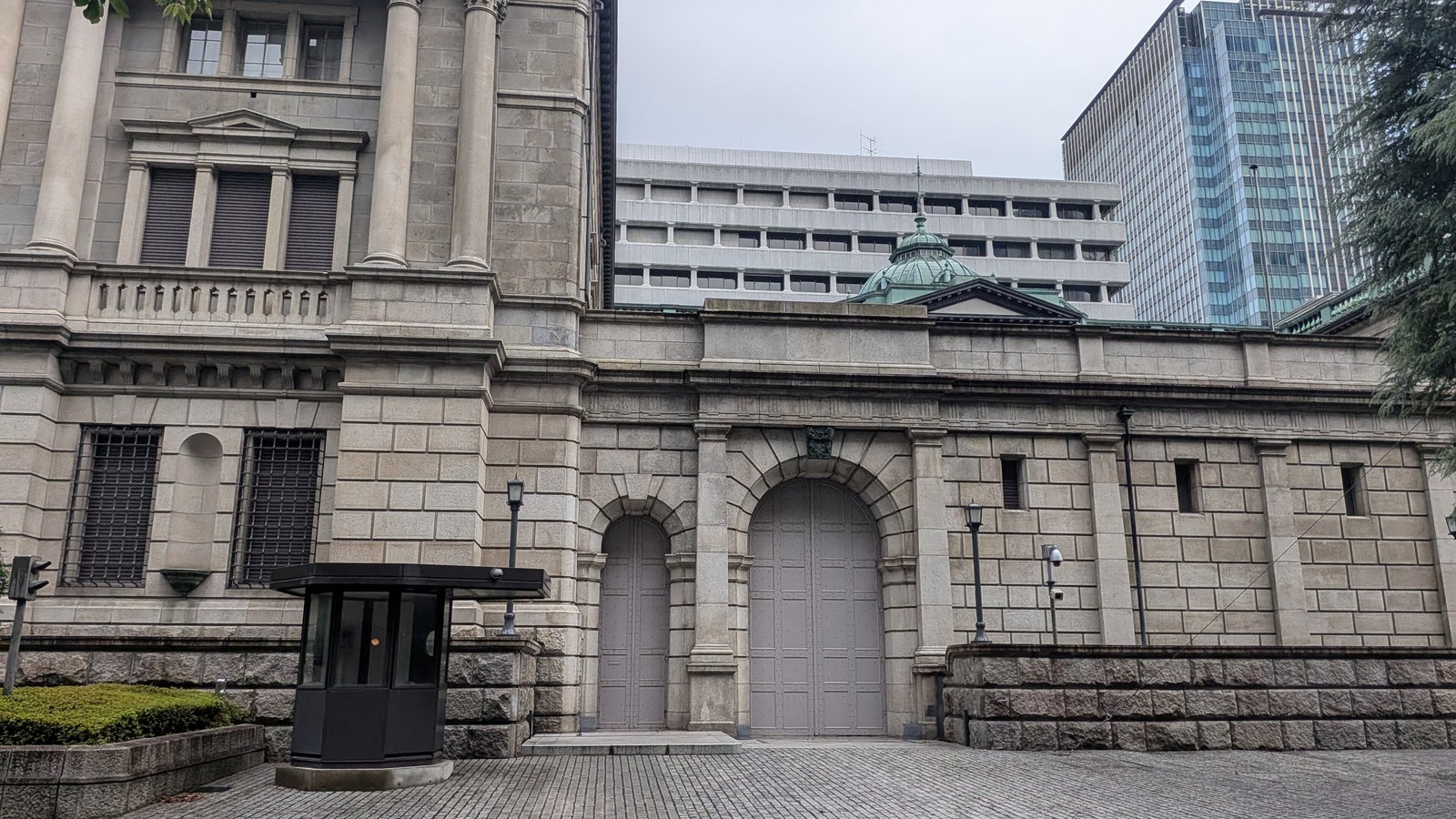
The Bank of Japan raised its policy rate to 1 percent in June, the highest level in 31 years, and its deputy governor has spent the weeks since being asked to defend it.
He spent most of Thursday morning in Saitama doing exactly that. Then, about two thirds of the way through, he said something that is not a defence of anything.
HIMINO Ryozo told a meeting with local leaders that the Bank has spent a long time asking whether underlying inflation is moving up and whether it will reach and settle at 2 percent, and that the indicators now oblige a second question. In the Bank's English translation of the speech: "I believe we are entering a phase where we will also need to bear in mind the possibility of underlying inflation exceeding 2 percent in addition to these considerations when making policy decisions."
The policy line, and the sentence under it
On policy itself he was direct. Given that underlying inflation has been approaching 2 percent and financial conditions remain accommodative, he said, "the Bank should continue to raise the policy interest rate and adjust the degree of monetary accommodation in accordance with developments in economic activity, prices, and financial conditions."
Timing and pace, he said, depend on how likely the baseline outlook is to hold and on the risks around it, which he named as the Middle East conflict, the expansion in demand related to artificial intelligence, and the exchange rate.
The asymmetry is the new part. If underlying inflation goes above the 2 percent target, he said, that would have an adverse impact on the economy, "and we should pay greater attention to the upside risk to prices than in the past."
Headline inflation has been running below target. He expects that to reverse: consumer price inflation will "move up and stay above 2 percent in the second half of fiscal 2026," on his account, because the pass-through of higher petrochemical prices to consumers has not happened yet, semiconductor prices are rising, and the yen is weaker.
Where the AI money is now showing up
The Bank's earlier assessment was that Japanese firms could not capture much of the artificial intelligence buildout, unlike Taiwanese and South Korean exporters of graphics processors and data centre equipment, so the effect would stay narrow.
"Such views may need to be reconsidered," Himino said.
His evidence is the trade price data. Japan's July import price index on a contract currency basis rose 17 percent on the year, driven mainly by crude oil and petrochemicals. The export price index on the same basis rose 10 percent, and the largest contributor there was products related to artificial intelligence. The items with the biggest month-on-month rises in July were MOS memory integrated circuits, precision measuring instruments and semiconductor manufacturing equipment.
That partly offsets the damage the energy bill is doing to Japan's terms of trade. For scale, he put annual United States information technology capital spending at about 1.7 trillion dollars, or around 270 trillion yen, with Amazon, Microsoft, Alphabet, Meta and Oracle alone expected to spend 0.8 trillion dollars this year.
He also passed on what the Bank's branch managers reported in July, which is the sort of detail that does not reach a rate decision: copper wiring for data centres has lifted copper mining, which has lifted sales of power shovels.
The yen, and an admission
The question he says he keeps getting is why the June hike did not stop the yen falling.
His answer is the orthodox one. "Monetary policy does not target exchange rates, but exchange rates have an impact on economic activity and prices," he said, and the pass-through from the currency to prices appears to be getting stronger. He then conceded that the answer does not satisfy people and that he has often sensed it leaves them unconvinced.
The numbers he cited on that point are worth keeping. In a March survey of small and medium-sized members by the Japan Chamber of Commerce and Industry, 41.5 percent said the weaker yen mattered more to their business than rising interest rates, against 25.6 percent who said the opposite. An NHK poll in July found 61 percent thought the weaker yen was bad for the economy and 22 percent thought it was good.
One more admission, on the Middle East. In April the Bank published a baseline and three risk scenarios, and Himino said he had assigned significant probability to the elevated oil price case and non-negligible probability to a supply chain disruption. "Fortunately, my concerns were proven misplaced," he said. He listed what he had not foreseen, including rerouting through the Red Sea, higher American supply, reserve releases and China's shift to coal.
He was careful about one word throughout. The June move, he said, "is an adjustment in the degree of monetary accommodation, not a tightening."