Lee County took 3,712 property tax appeals. A hearing granted 78.
Most Florida property tax appeals in Lee and Collier never reach a hearing, and the ones that do can still be thrown out in April for an unpaid bill. The county records show where petitions go, what filing now costs, and the payment rule that outlives the September deadline.
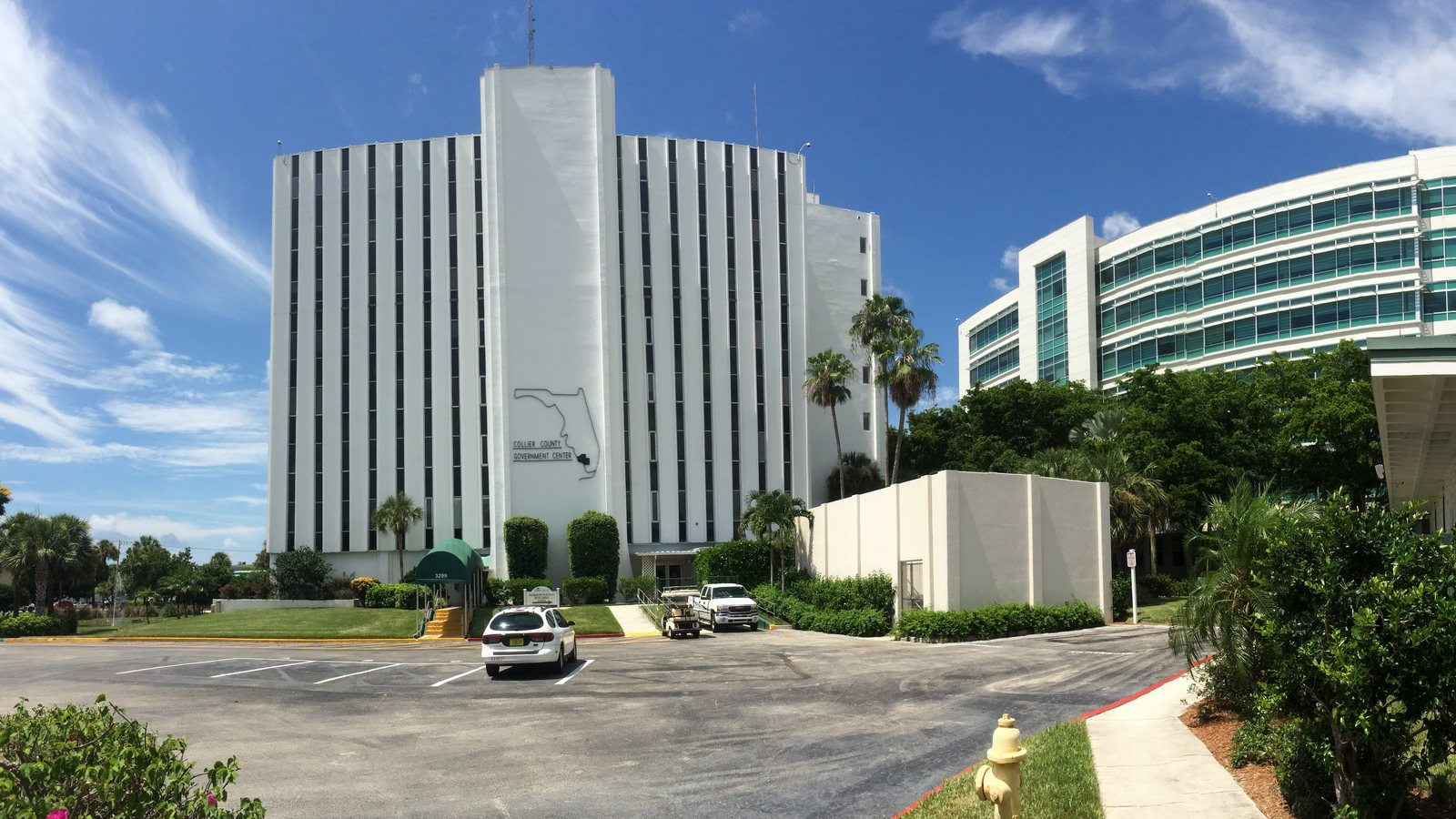
Item 8a on the April 8 agenda of the Lee County Value Adjustment Board was one sentence long, according to the minutes in the board's May 28, 2026 meeting packet. It asked the board to deny every pending petition whose owner had not paid the required tax before the bill went delinquent on April 1. The motion carried.
That vote is where some Florida property tax appeals end, months after they were filed on time. It does not appear in most guides to the process, which stop at the 25-day filing window. Yet the board's own records show that the filing window is the easy part. Of 3,712 petitions filed in Lee for the 2025 tax year, 3,130 were withdrawn and 404 reached a hearing. Seventy-eight were granted.
This piece follows a petition from the notice to the courthouse using the records the Lee and Collier boards publish, and the statutes they apply. The way a single parcel's tax is computed is covered in our walk through Florida's millage math.
Photograph: Swarm / Wikimedia Commons, CC BY-SA 4.0; cropped.
How does a Florida property tax appeal work?
A Florida property tax appeal is a petition to the county value adjustment board, filed with the board clerk, asking it to change the property appraiser's value, exemption or classification. In Lee and Collier a special magistrate hears the case and recommends a decision, which the board adopts. An informal conference with the appraiser is optional.
The route is set out in section 194.011 of the Florida Statutes. Any owner who objects to an assessment may ask the appraiser's office to confer, and the office must do so. The statute is explicit that the conference is not a prerequisite to a petition or to a lawsuit. It is a conversation, and it can settle a case. The Lee County Property Appraiser says owners can request one at any time of year.
The formal step is the petition, on the Department of Revenue's form, sworn by the owner or filed by an authorized agent. Condominium, cooperative and homeowners' associations may file a single joint petition for units the appraiser agrees are substantially similar.
Counties with more than 75,000 residents must use special magistrates under section 194.035. They are attorneys or appraisers who are not county employees. Both Lee and Collier are far above that threshold, so the person who hears a Southwest Florida petition is a magistrate, not a county commissioner.
What are the deadlines for a Florida property tax appeal?
A petition on value must be filed on or before the 25th day after the property appraiser mails the notice of proposed property taxes, the TRIM notice, in August. Petitions on a denied exemption or classification get 30 days from the denial notice. In Collier the 2026 deadline was September 11 at 5:00 p.m.
The 25-day and 30-day periods come from section 194.011(3)(d). Because the clock runs from the mailing date, the calendar deadline moves each year. The Collier County Clerk set it at September 11, 2026, after notices reached owners the week of August 24. The year before, the Collier deadline was September 12, 2025.
Nothing in the statute pauses that clock while an informal conference is pending. An owner who is still talking to the appraiser on day 26 has lost the petition route for the year, unless the board accepts a late filing.
Several dates follow the filing deadline, and they matter more than the one most guides list:
| Date | What happens | Source |
|---|---|---|
| August | TRIM notice mailed; 25-day clock starts | s. 194.011(3)(d) |
| 15 days before the hearing | Each side gives the other its evidence list and documents | s. 194.011(4) |
| October | Lee rolls certified for collection | Lee Property Appraiser |
| November 1 | Taxes due; 4 percent discount in November | ss. 197.333, 197.162 |
| April 1 | Taxes delinquent; the payment test for petitioners | ss. 197.333, 194.014 |
| April 20 | Board must deny petitions that failed the payment test | s. 194.014(1)(c) |
How much does it cost to file?
Since July 1, 2025, a value adjustment board may charge up to $50 per parcel to file a petition, up from a $15 cap. Collier now charges $50 for most petitions and $15 for a portability petition. No fee may be charged for appealing a denied homestead exemption or a denied tax deferral.
The increase came from section 8 of chapter 2025-208, Laws of Florida, which amended section 194.013. The 2024 version of the same section reads $15. The Department of Revenue described the change in a bulletin dated May 13, 2026, PTO 26-01, which Lee's board placed in its final meeting packet. A fee that is not paid at filing makes the petition invalid, and the statute says it shall be rejected.
The Collier Clerk's announcement for the 2026 session states the $50 and $15 figures. Lee's board budgeted its 2025 filing fee revenue at 3,500 petitions at $30 each and reported $111,195 as the final figure, according to the income and expense report in its May 28, 2026 meeting packet. The same report puts the cost of running the 2025 cycle at $289,862.80, including $89,457.58 for special magistrates. Fees covered about 38 percent of it, and the county commission and school board paid the rest.
Joint petitions carry a separate charge of no more than $5 per parcel for the magistrate's time, on top of any board fee. Owners who receive temporary cash assistance under chapter 414 can have the fee waived with documentation from the Department of Children and Families.
How often do appeals succeed in Lee and Collier?
In Lee County, the board heard 404 of 3,712 petitions filed for the 2025 tax year and granted 78 of them, or 19.3 percent of those heard and 2.1 percent of those filed. In Collier, the board reduced 22 of the 881 parcels whose assessments were challenged for 2025, about 2.5 percent.
Lee's numbers come from the petition statistics in its May 28, 2026 final meeting packet, which break the year down by petition type.
| Lee County, 2025 tax year | Filed | Withdrawn | Not accepted | Heard | Granted | No show | Denied |
|---|---|---|---|---|---|---|---|
| Real property | 3,440 | 2,949 | 151 | 340 | 70 | 69 | 201 |
| Exemption | 84 | 17 | 7 | 60 | 6 | 0 | 54 |
| Tangible personal property | 165 | 155 | 10 | 0 | 0 | 0 | 0 |
| All petition types | 3,712 | 3,130 | 178 | 404 | 78 | 69 | 257 |
Source: Lee County Value Adjustment Board, 2025 petition statistics, exhibit 10a. "Not accepted" covers administrative withdrawals and late petitions denied for lack of good cause.
Two numbers stand out. One in five real property hearings ended with the petitioner absent: 69 no shows against 70 grants. And exemption petitions, which carry no presumption that the appraiser was right, fared worse than value petitions, with 6 granted out of 60 heard.
The county tax-impact notices, which every board must publish under section 194.037, count parcels rather than petitions and add the money.
| Form DR-529, 2025 tax year | Lee | Collier |
|---|---|---|
| Parcels with assessment changes requested | 3,587 | 881 |
| Parcels with assessments reduced | 68 | 22 |
| Parcels withdrawn or settled | 3,300 | 522 |
| Exemptions requested / granted | 198 / 10 | 21 / 0 |
| Reduction in county taxable value | $31,888,699 | $3,206,633 |
| Taxes shifted to other owners | $464,101.79 | $51,840 |
Sources: Lee County VAB tax impact notice, exhibit 8g; Collier County VAB tax impact notice.
The money follows commercial property. In Lee, commercial parcels made up 26 percent of the assessment requests but 57.8 percent of the $31.9m reduction in taxable value, $18.4m in all. Residential parcels accounted for 1,602 requests and $11.3m.
Collier moves by year. Its 2025 requests rose to 881 parcels from 767 in 2024, an increase of 14.9 percent, while the value the board took off the roll fell to $3.2m from $17.4m in 2024. Fourteen parcels were reduced in 2024 and 22 in 2025. A small number of large parcels can swing the total, and two years are not a trend.
Why do most petitions never reach a hearing?
Most petitions end before a hearing because they are withdrawn, often after the owner or agent and the appraiser's office settle the value, or because the owner drops the case. In Lee, 84.3 percent of 2025 petitions were withdrawn. The records do not separate withdrawals that came with a lower value from those that did not.
That limit is real and it changes how the success rate should be read. The DR-529 column is headed "withdrawn or settled." A petition withdrawn because the appraiser agreed to cut the value is a success for the owner that never shows up as a grant. A petition withdrawn because the owner gave up is not. Neither county's published forms say how many fell in each group, so any claim that "only 2 percent of appeals work" overstates what the documents show, and so does any claim that most owners who file get a reduction.
What the records do show is narrower. Once a Lee petition went to a hearing in 2025, the magistrate's recommendation favored the owner about one time in five.
What must be paid while a petition is pending?
An owner challenging value must pay all non-ad valorem assessments and at least 75 percent of the ad valorem taxes, less any early payment discount, before the taxes become delinquent on April 1. For an exemption or classification dispute, the owner pays the amount admitted in good faith. Miss the payment and the board must deny the petition by April 20.
This is section 194.014, and its timing is the trap. The petition is filed in late summer. The tax bill arrives in November, under section 197.333. Some cycles run well past that: Lee's 2025 board held its final meeting on May 28, 2026. An owner who reasons that there is no point paying a bill still under appeal loses the appeal by operation of law.
Take a homestead with $8,000 of ad valorem tax and $600 of non-ad valorem assessments on the bill. To keep a value petition alive, the owner must pay the full $600 and at least $6,000 of the ad valorem portion, reduced by whatever discount applies in the month of payment, before April 1. That is our arithmetic on the statute's terms, not a figure from either county.
The rule is enforced. At its April 8, 2026 special meeting, the Lee board voted to deny the petitions of owners who had not paid. Its May 28 packet then reversed two of those 2025 denials, and one from 2023, after the tax collector or the owner's representative showed that the taxes had in fact been paid on time. The 2025 corrections came seven weeks after the denials. The 2023 petition had been denied on April 5, 2024, and was not reinstated until more than two years later.
What happens if the board finds more tax is owed, or less?
If the board's decision leaves the owner owing more than was paid, the shortfall accrues interest at the bank prime loan rate on July 1 of that year, starting from the delinquency date. A refund accrues interest at the same rate. The prime rate on July 1, 2026 was 6.75 percent, according to Federal Reserve data.
The interest rule is in section 194.014(2), and it runs in both directions. The rate is the prime rate the Federal Reserve publishes, read on July 1: 6.75 percent in 2026 and 7.50 percent in 2025 in the FRED series for the bank prime loan rate. In the example above, if the owner pays $6,000 and loses, the remaining $2,000 carries roughly $135 of interest a year at 6.75 percent until it is paid.
Two limits apply. Interest does not accrue on any amount paid above 100 percent of the taxes on the notice. And if the board finds an exemption claimant's admitted amount was grossly disproportionate and not made in good faith, the tax collector adds a penalty of 10 percent of the deficiency per year.
There is also a discount rule that favors paying. Under section 197.162(3), when a board decision produces a corrected tax notice before April 1, the 4 percent discount applies again for 30 days after it is sent.
Who has to prove what at the hearing?
The owner carries the burden of proof. On a value challenge, the appraiser's assessment is presumed correct if the appraiser shows it followed the statutory valuation factors and accepted appraisal practice. The owner must then prove by a preponderance of the evidence that the value exceeds just value, or that the method departed from how comparable property was treated.
Section 194.301 sets that order. If the owner overcomes the presumption, the board can set a new value only where the record holds competent evidence of one. Otherwise it sends the assessment back to the appraiser with directions. On exemption and classification petitions there is no presumption for either side, but the owner still bears the burden.
The evidence exchange under section 194.011(4) is where hearings are often decided before they start. Each side must give the other its evidence list, its documents and a summary of witness testimony at least 15 days before the hearing. The appraiser's list must include the property record card, and if the appraiser misses the deadline the hearing is rescheduled. Comparable sales, photographs and repair estimates belong in that package, not in a folder brought to the hearing.
Is the board's decision final?
Not always. An owner can file in circuit court within 60 days of the date the roll is certified for collection, or of a late board decision, after paying the tax admitted in good faith. The property appraiser can also take a board decision to court, but only on stated grounds, including a reduction above set percentage thresholds.
The owner's route is section 194.171, and the court hears the case anew, with the burden on whoever brings it. The 60-day limit and the payment requirement are jurisdictional: a court that finds either missing has no power to hear the case. Lee's appraiser says its rolls are certified in October, which starts that clock.
The appraiser's route is narrower. Under section 194.036, the appraiser may appeal when the board's value departs from the assessment by more than 20 percent on an assessment of $250,000 or less, 15 percent up to $1m, 10 percent up to $2.5m and 5 percent above that, or when the appraiser asserts a specific legal violation. A large cut on an expensive parcel is the decision most exposed to a second round.
Court changes the interest arithmetic. If a judge finds more tax was owed than the owner paid, section 194.192 sets interest at 12 percent a year from delinquency, not the prime rate. On the same $2,000 shortfall that is $240 a year rather than $135.
What survives a missed deadline?
A board may still consider a late petition if the owner shows good cause in writing: a personal or business emergency, illness or disability, misinformation from the clerk or appraiser's staff, or another cause beyond the owner's control. The board cannot extend the deadline, and the circuit court's 60-day window runs on its own clock.
The good cause standard is in Department of Revenue rule 12D-9.015(14), which binds every board. The clerk accepts a late petition but does not schedule it until the board or its designee rules on the written explanation, and a petition with no explanation goes nowhere. Lee recorded five late exemption petitions for 2025. None reached a hearing.
The same rule notes that a petitioner may file a timely circuit court action to preserve the right to proceed there. For an owner whose board petition is in doubt, the court deadline tied to the October certification is the one still open.
Common questions about Florida property tax appeals
Do I need a lawyer or an agent to file?
No. The owner can sign and file the petition. A representative may file with the owner's written authorization or power of attorney, valid for one assessment year, and certain licensed professionals listed in section 194.034 may instead certify their authority under penalty of perjury. The owner is bound by the decision either way.
Can I appeal the value if I have a homestead exemption?
Yes. The petition can challenge just value, and section 194.011 expressly covers disputes over the homestead assessment difference carried from a previous home. Because Save Our Homes may already hold the assessed value below just value, a lower just value changes this year's tax only if it falls below the capped assessed value. The 25-day window and the payment rule apply in the same way.
Does filing a petition delay my tax bill?
No. The tax collector bills on the November schedule regardless. The petitioner must pay at least the statutory share before April 1 to keep the petition, and any refund comes later with interest at the July 1 prime rate.
Does a successful appeal lower my neighbors' taxes?
It does the opposite. The DR-529 column headed "shift in taxes" is the amount moved onto owners who did not get relief. In Lee for 2025 it was $464,101.79, spread across the rest of the roll.